


A review of Christian Chensvold, Gothic Olympus (London: Arktos, 2026). 170 p.
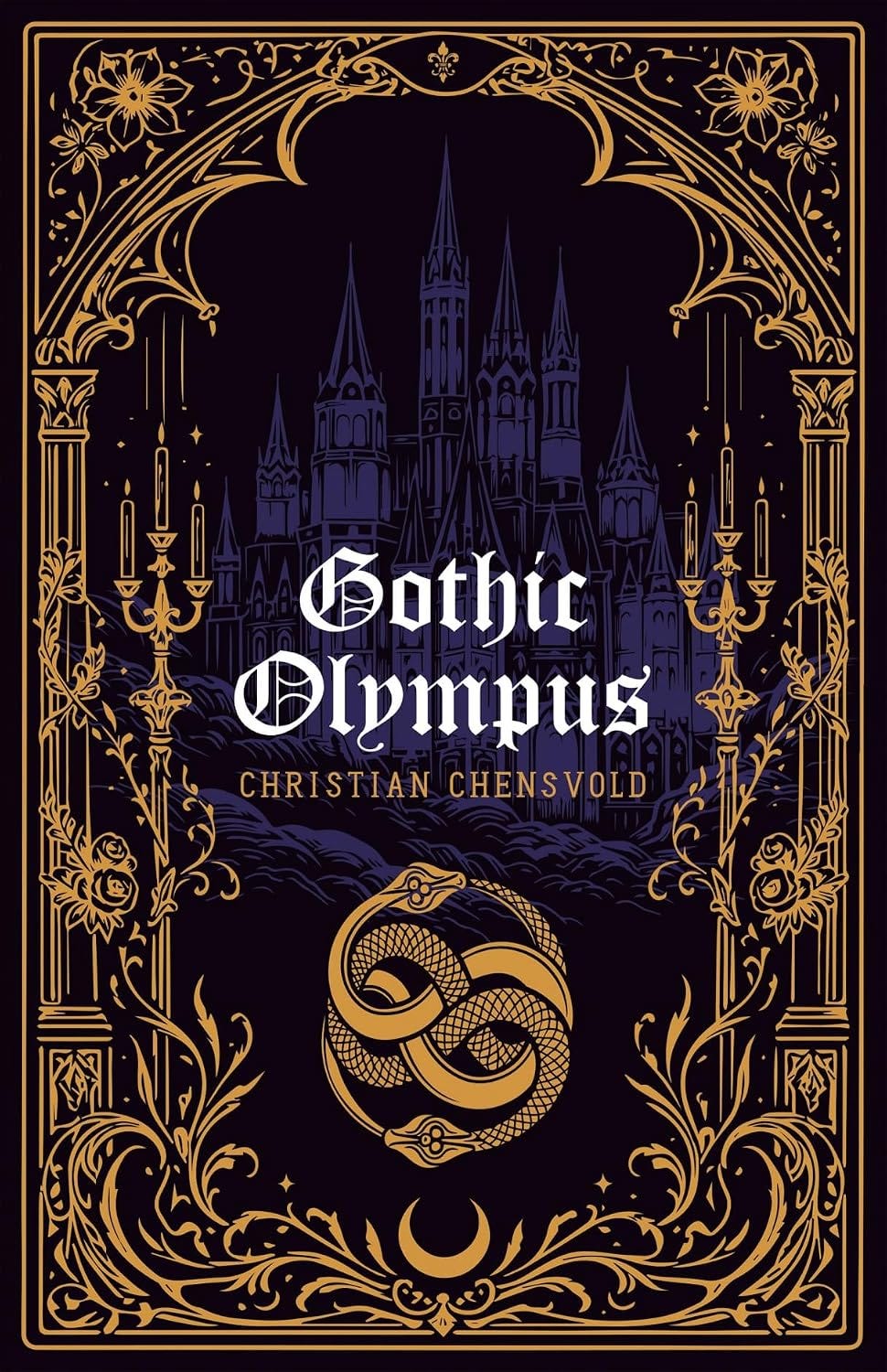
Gothic Olympus is an unusual and ambitious novel that combines several literary traditions into a single symbolic narrative. Drawing on fin-de-siècle decadence, Greek mythology, Western esotericism, Tarot symbolism, and reflections on the decline of Western civilization, the novel creates a world that moves constantly between history and myth, personal experience and spiritual destiny. Rather than following the conventions of contemporary realism, it seeks to build a symbolic universe in which characters, places, and events carry meanings that go far beyond their immediate role in the plot.
At the center of the story stands Julien Stanwyck, a young American artist whose life changes completely after the death of his mother. Before her death, she reveals that Julien’s true father was not the man who raised him but a French nobleman, the Comte de la Tour-Abolie. This discovery begins what appears at first to be a simple search for family origins and inheritance. However, as the novel develops, this search becomes something much larger. Julien’s quest for his father gradually turns into a search for spiritual origins, cultural identity, and ultimately a connection with the divine.
One of the most interesting ways to understand Gothic Olympus is through the ideas developed by Joseph Campbell in The Hero with a Thousand Faces.
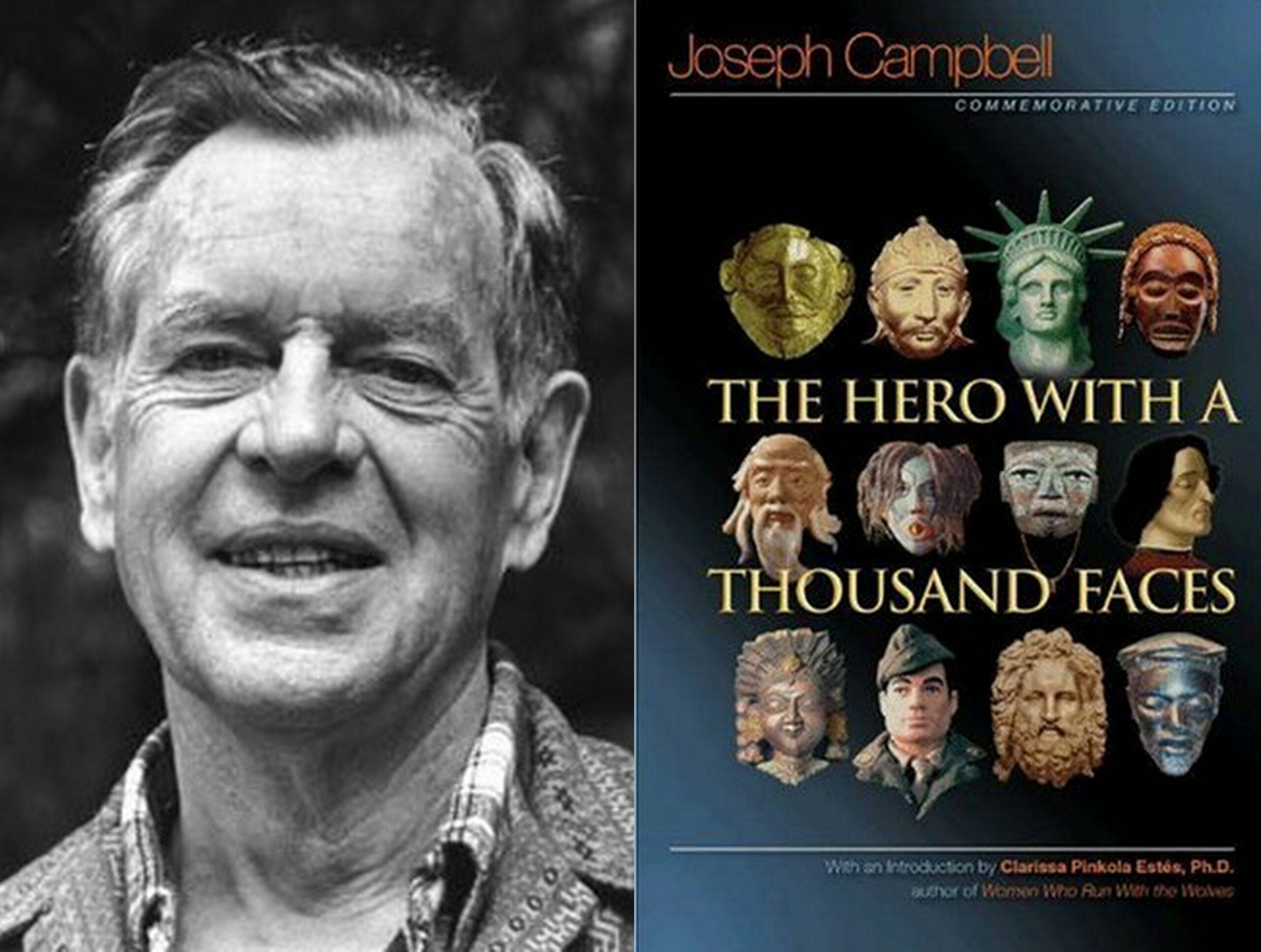
Campbell argued that many myths and stories from different cultures follow the same basic pattern, which he called the “hero’s journey.” The hero receives a call to adventure, leaves the ordinary world behind, faces trials and transformations, gains new knowledge, and eventually returns changed.
Julien’s story follows this pattern very closely. The death of his mother acts as the call to adventure. His departure from America marks the separation from his ordinary life. The shipwreck that occurs during his journey to Europe functions as a symbolic crossing of a threshold. In mythological traditions, water often represents death and rebirth, and this is exactly how the episode works in the novel: the destruction of the ship seems to erase Julien’s old identity and prepare him for a new existence. When he survives together with Zoe Wingate, it feels as though both have been chosen by forces beyond ordinary human understanding.
Zoe plays a crucial role throughout the novel. More than a romantic figure, she serves as a guide who introduces Julien to the world of symbols, Tarot, and destiny. In many ways she resembles the spiritual helpers who often appear in Campbell’s model of the hero’s journey. She helps Julien understand that his life is part of a larger pattern and that his experiences carry meanings that are not immediately visible.
The novel’s Parisian section is perhaps its most openly decadent part. Here Julien reinvents himself as Count Wrathchild, a theatrical performer and poet whose artistic career transforms his personal suffering into spectacle. Through this persona he becomes a symbol of beauty, decline, and cultural exhaustion. The atmosphere of these chapters recalls the world of late nineteenth-century European decadence, especially writers such as Joris-Karl Huysmans, Oscar Wilde, and Gabriele D’Annunzio. Yet the novel does not simply imitate these influences. Instead, it uses decadence as a stage in Julien’s spiritual development.
As Count Wrathchild, Julien turns decay into art. His performances celebrate beauty at the edge of collapse. Yet the novel makes clear that this fascination with decline cannot be the final answer. Julien is still trapped within the world of appearances. He has learned how to transform suffering into beauty, but he has not yet discovered a deeper purpose.
This deeper dimension begins to emerge when Julien arrives at the Château de la Tour-Abolie, the castle that forms part of his inheritance. The castle is one of the most important symbols in the entire novel. Although it still stands, it has fallen into ruin. It survives as an empty shell, deprived of the life and meaning it once possessed. As a symbol, the castle represents the state of European civilization itself. The structures remain, but the spiritual principles that once gave them meaning have largely disappeared.
The novel repeatedly returns to this theme. It presents modernity as an age marked by mass culture, materialism, and the loss of sacred values. It is this sense of civilizational decline that forms the emotional background of the entire story.
This theme is further developed through the character of Regina de la Fontaine-Sombre. Much more than a traditional villain, Regina represents what might be called active decadence. Unlike those who merely witness decline, she embraces and accelerates it. She uses social and cultural collapse as a tool for gaining power. Her conflict with Julien is therefore not simply personal, but represents two different responses to a world in crisis: one seeks spiritual renewal, while the other exploits destruction for its own purposes.
The appearance of Zapfe marks another important turning point in the novel. Up to this point, Gothic Olympus remains largely recognizable as a decadent historical fantasy with occult elements. After Zapfe enters the story, however, the narrative moves increasingly into the realm of myth and metaphysics.
Zapfe reveals that Julien’s destiny is much greater than he imagined. The crisis of Europe is presented not merely as a political or cultural problem but as a spiritual one. Humanity has lost contact with the divine world. As a result, the solution cannot come through politics or social reform. It must come through initiation and inner transformation.
This revelation leads to the novel’s most original section: Julien’s journey through an astral Greece populated by gods, archetypes, and symbolic landscapes. Here the story leaves realism almost completely behind, instead morphing into a sequence of initiatory experiences that reshape the protagonist from within.
The gods Julien encounters are not simply characters borrowed from classical mythology. They function as living archetypes: Achilles represents courage, discipline, and heroic action; Eros embodies the power of desire and attraction; Aphrodite represents beauty as a spiritual force; Zeus symbolizes sovereignty and divine authority. Through these encounters, Julien does not merely learn about the gods — he absorbs their qualities and incorporates them into his own being.
Once again, Campbell’s ideas help illuminate this part of the novel. These episodes resemble the trials and revelations that the hero experiences in the deepest stages of the journey. Julien undergoes a symbolic death of his former self and emerges transformed. He is no longer merely a decadent artist. He becomes a figure with a sacred mission.
READ MORE:
The Meaning of the Penguin and the Coming of Gothic Olympus

A lone penguin who leaves his group to march into the unknown, heading out into the horizon towards distant mountains — this clip extracted from Werner Herzog’s Encounters at the End of the World has suddenly become a viral meme.
One of the novel’s most interesting themes is its treatment of eros. Rather than presenting desire as simply romantic or physical, Gothic Olympus views it as a cosmic force capable of both destruction and transformation. Desire can enslave or liberate. It can pull human beings downward or raise them toward transcendence. The relationship between Julien, Aphrodite, and Darlena explores this idea in depth. Darlena is not simply a love interest. She represents the completion of Julien’s spiritual development and the reconciliation of beauty, desire, and sacred meaning.
When Julien finally returns to the ordinary world, twenty years have passed. This return corresponds to the final stage of Campbell’s hero’s journey. The hero comes back transformed and carrying a form of wisdom gained through suffering and initiation.
Yet Gothic Olympus offers a particularly melancholic version of this return: Julien discovers that Europe has continued to decline during his absence. The old world has not been restored. Modernity has advanced. Traditional forms have collapsed. The civilization he hoped to save appears largely lost.
This is one of the novel’s most mature and interesting features. Despite its admiration for aristocratic and spiritual ideals, the book does not ultimately suggest that the past can simply be restored. Julien does not rebuild the old order. He does not become a political savior. His victory is symbolic rather than historical.
The novel therefore presents a fundamental contrast between myth and history. History appears as the realm of decline, conflict, and impermanence. Myth, by contrast, preserves meaning beyond the destruction of particular societies and institutions. While civilizations may disappear, the spiritual truths expressed through myth can survive.
This idea gives the ending much of its emotional power. Julien does not save Europe in a practical sense. Instead, he preserves the possibility of meaning, beauty, and transcendence in a world that seems increasingly disconnected from them.
The style of Gothic Olympus reflects these ambitions. The prose is rich, dramatic, and highly symbolic. The novel favors visions, rituals, and archetypes over psychological realism. Readers accustomed to minimalist fiction may find its style excessive at times, but this excess is clearly intentional. The novel aims not for realism, but for enchantment. It seeks to create an atmosphere filled with ruined castles, occult revelations, mythological encounters, and spiritual mysteries.
In the end, Gothic Olympus is a bold and deeply unconventional work. Its greatest achievement lies in its ability to combine decadence, mythology, esotericism, and the structure of the hero’s journey into a coherent symbolic vision. Through Julien Stanwyck’s transformation, the novel explores questions of identity, destiny, cultural decline, and spiritual renewal. It suggests that even when history appears to have lost its direction, myth may still provide a source of meaning.
Enter the world of Gothic Olympus, brought to you by Arktos

EXPLORE MORE:
Christian Chensvold is the author of the Decadent Chronicles series, exclusive to Arktos Journal:
7: LARP Against the Modern World
10: Anywhere Out of This World
11: Towards a Gothic Fighting Style
Part 12 coming soon!