


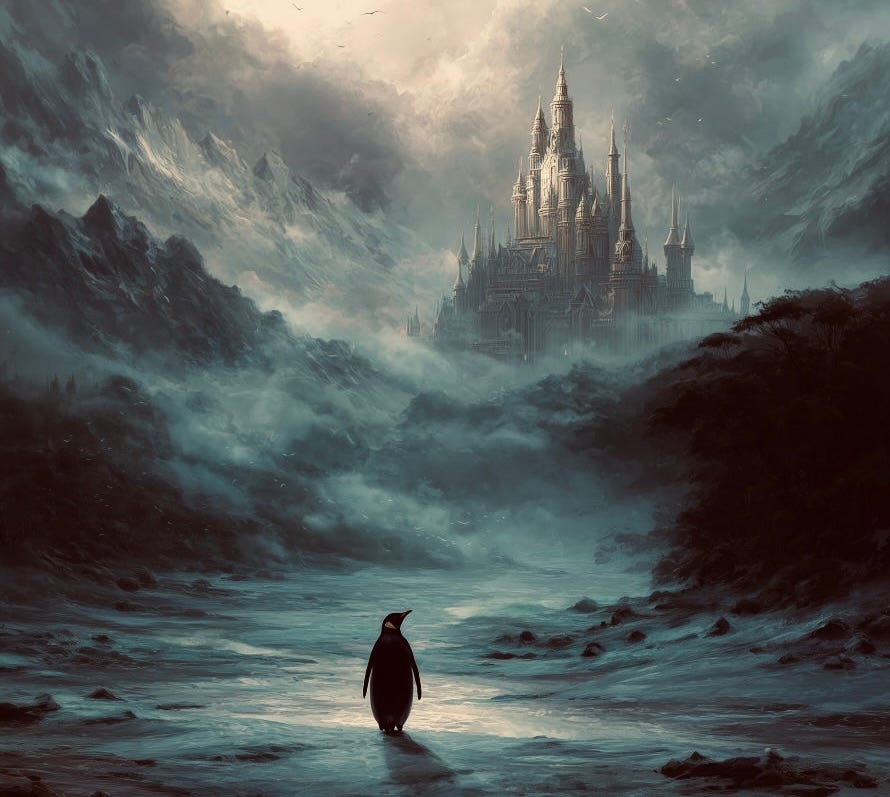
A lone penguin who leaves his group to march into the unknown, heading out into the horizon towards distant mountains — this clip extracted from Werner Herzog’s Encounters at the End of the World has suddenly become a viral meme.
In the span of a few days, the penguin has irrupted and proliferated like a lost-and-found archetypal symbol, striking a deep chord with men across the West. In this age of Artificial Intelligence, feminist tyranny, and demographic replacement, there are few things more powerful than when men find resonance in primal symbolism.
On the surface, according to the film’s narration, it seems as if the penguin has gone insane and is wandering off to certain death. But the key note that has resonated with disaffected men in 2026 is that the penguin — who also reflects the consciousness of the viewer watching him on the internet — has turned his back on a corrupt society in quest of higher truth. The only “death” he faces is that of his old ego, conditioned by his late-stage society of materialism, fraud, and his own “planned obsolescence.”
On the horizon, towering above and beyond his little (lesser) self, stands the mountain range, an ancient symbol of the place of spiritual enlightenment. From Mount Meru in the Indo-Aryan tradition to Mount Sinai in the Bible and Montsalvat in the medieval Grail legends, mountains represent remote, inaccessible places where common men fear to tread, but to which heroes are drawn by destiny.
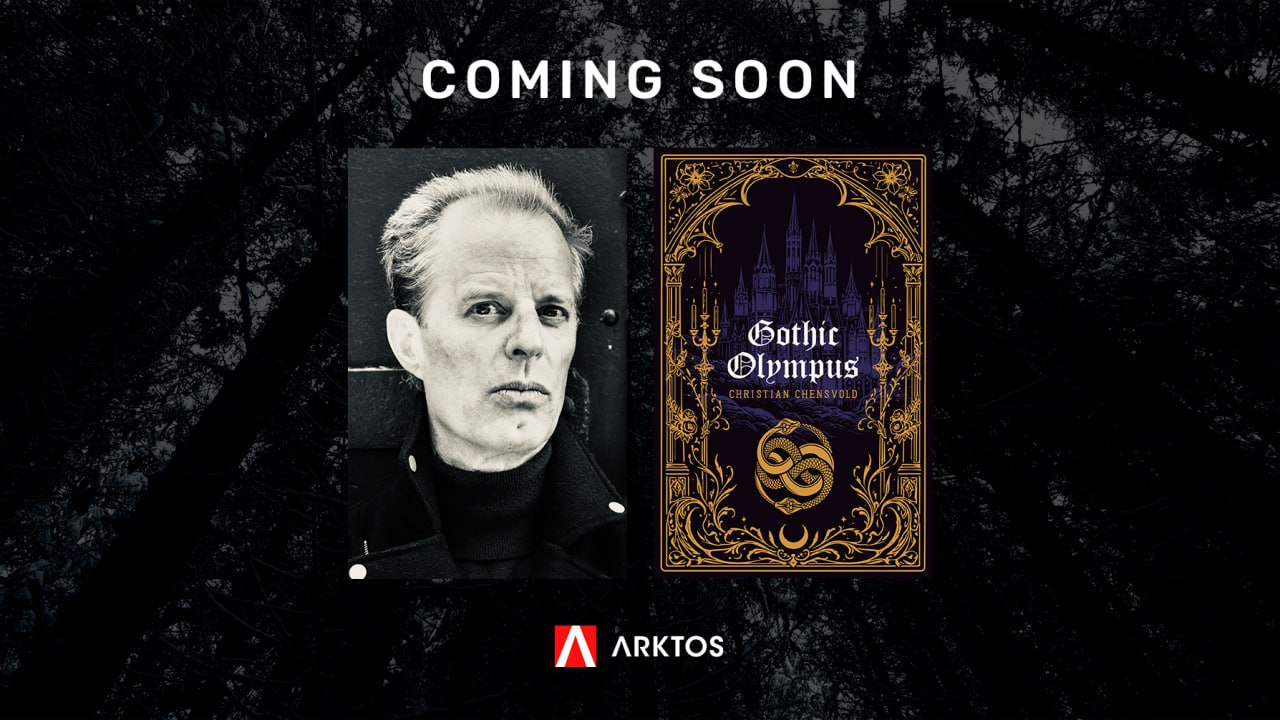
Symbols like this do not merely speak to us — they inspire us, in turn, to raise our voices, to speak out. Here and now, enjoying and revering the majestic symbolism of the “penguin meme,” I’m pleased to announce that Arktos will be publishing my own tale of heroic departure, adventurous destiny, and spiritual wayfaring: Gothic Olympus.

When a mysterious inheritance leads Julien Stanwyck from the hazy clubs of New York to the absinthe-glowing cabarets of fin-de-siècle Europe and the ruins of a family château, a drama of infernal torments and divine fury rattles the cage of the modern world.
Gothic Olympus launches the reader into the phantasmagoric odyssey of one man’s mission to reawaken the old gods and defy the onslaught of demonic collectivism and matriarchal tyranny. It follows Julien Stanwyck’s alchemical transformation from a pale, scrawny, angry young man into an Olympian sovereign who conquers death with the sword of Achilles, wins a goddess for a bride through initiation into the Mysteries of Sex, and travels through earthly and celestial realms to fulfill his destiny.
A mythopoetic allegory for the twilight of Western Civilization between the Belle Époque and the present dystopia, Gothic Olympus detonates the postmodern abyss through a pulse-pounding concoction of dark humor, occult wisdom, and virile spirituality, weaving Julius Evola’s revolt against the modern world with elements of steampunk, dark fantasy, and Decadence.
Through the magic mirror of Stanwyck’s trials and adventures, Gothic Olympus is a riveting tale of heroism, a summons to metaphysical awakening, and a daring vision of the greatest force the world has ever known: European man’s imagination.
Arktos Journal readers might recognize me as the author of the Decadent Chronicles series, in which I’ve sometimes referred to my previous book, Dark Stars: Heroic Spirituality in the Age of Decadence. You might also have come across my work in the field of men’s style, such as my book The Philosophy of Style or Dandyism.net, which I ran from 2004-2025, taking inspiration from Charles Baudelaire’s assertion that dandyism was “the last stroke of heroism in times of decadence.”
When it comes to Gothic Olympus, my own “penguin moment” has been the path I’ve trodden over the past nine years, during which I’ve read voraciously, climbed forest hills daily, and given up on my old self and old comforts in order to seek the path of the spirit. The work of Julius Evola — who was also an avid climber and wrote frequently about the mountain as spiritual metaphor — has been a major influence, helping me understand what has been at work in my psyche throughout this life, as well as what is direly missing and profoundly in need among our “penguins.”
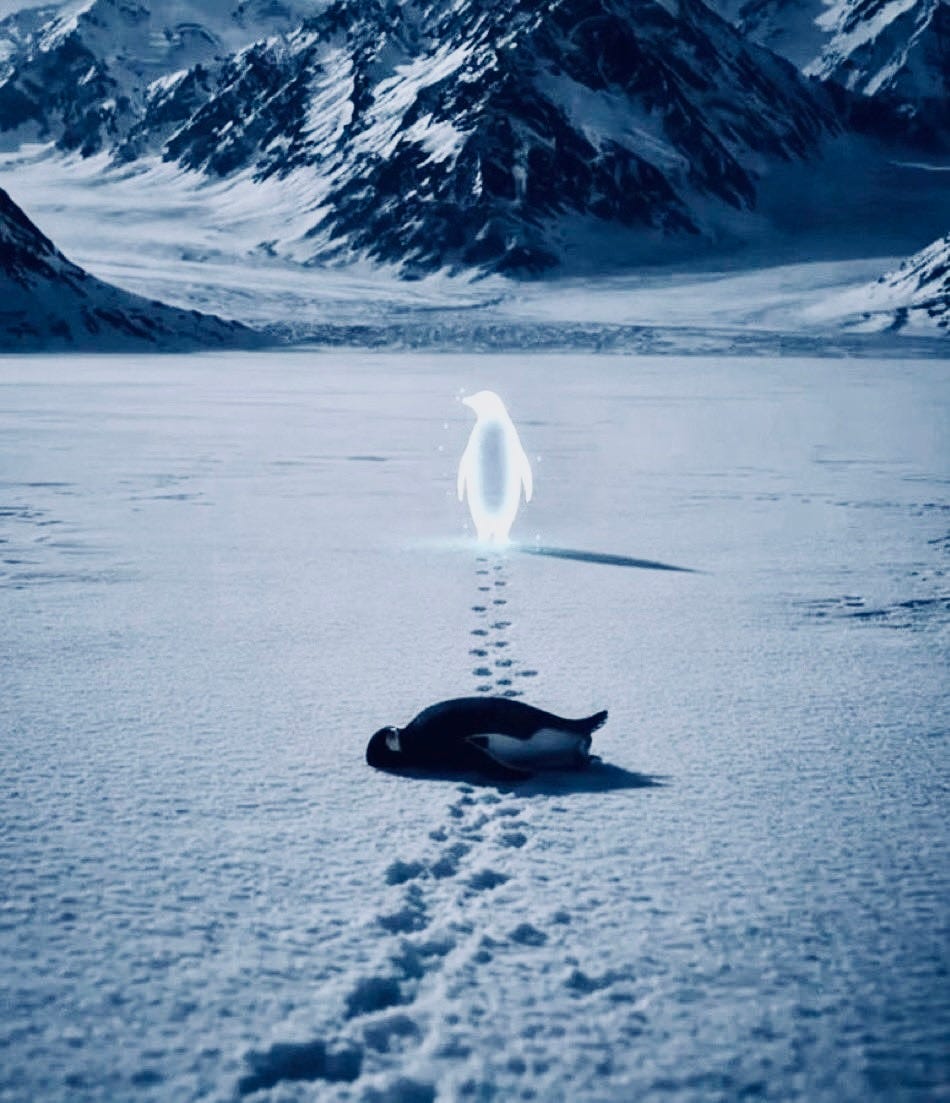
The enchantment we feel with the penguin trope reflects our thirst for heroic spirituality, which our civilization traditionally expressed and transmitted through epic tales. The hero’s journey lies at the very heart of European culture, descending from the regal Primordial Tradition, and is part of who we are — exiled sons of Hyperborea. As a spiritual quest it may be seen in the story of Odysseus in ancient Greece, Parsifal in the medieval Grail legend, and has a modern echo in Luke Skywalker in the original Star Wars trilogy. It “may be seen” — because we need to relearn how to see, how to read and to envision with the spiritual eyes our ancestors bequeathed to us.
I remember first seeing Luke when I was seven years old, and nearly half a century later I still write about him. After his farm is destroyed and family killed, he could have skipped the academy, rebuilt the farm, and become merely a scholar of the Jedi order Obi-Wan told him about. He also could have glimpsed the light of the Force at the root of his being and melted into mystic rapture, going on to become a priest, proselytizing unbelievers like Han Solo. But instead he embarks on the heroic path, learns the light and dark side of the divine animating power of the universe, enters into rapport with it, and learns how to actually wield it. In keeping with traditional myths, only the chosen one is able to do this, once he uncovers and accepts his true identity and calling.
Heroic spirituality is the quest for re-integration with the divine. It occurs during the winter period of civilization when the temples are closed, the wisdom is forgotten, and the carriers of the Tradition are dispersed. Society has become material and merely human, and the seeker must actively cultivate experiences that lead him from earthbound personality into the caverns of his soul — where he encounters all the archetypes, which are reflected prism-like within himself — and then from soul to spirit. Then he must stand on his own two legs in the numinal dimension of consciousness, which is what it means to win immortality and divine freedom, which is the entire point of this quest.
Such is the story of Julien Stanwyck in Gothic Olympus, which draws squarely on Western literary and esoteric traditions. Staring down the contradictions of postmodernity, Gothic Olympus weaves together a juxtaposition of themes and tropes — Greek and Gothic, steampunk technology and ancient doctrines — into a tale which, I hope, will serve to remind us, the men of 2026 watching Western Civilization’s free-fall into terminal decadence, of the great journey we have ahead of us.
Like the penguin’s turn towards the ascending mountains, Gothic Olympus is just as much about heading out as it is about coming home — returning to our spiritual homeland whose pathways run through the depths and heights of the European imagination.
Gothic Olympus is set to be released by Arktos on February 27th, 2026.
The ebook edition is now available for pre-order.
Discover Christian Chensvold’s Decadent Chronicles series, brought to you by Arktos Journal:
7: LARP Against the Modern World
Decadent Chronicles 9: Dead Regency

Christian Chensvold grasps the link between the Decadent Movement’s fascination with decline and the hollow spectacle of contemporary Western consumerism, suggesting today’s society is living out the very decay those artists once foretold, but lacking the European creativity that can turn horror into beauty.