


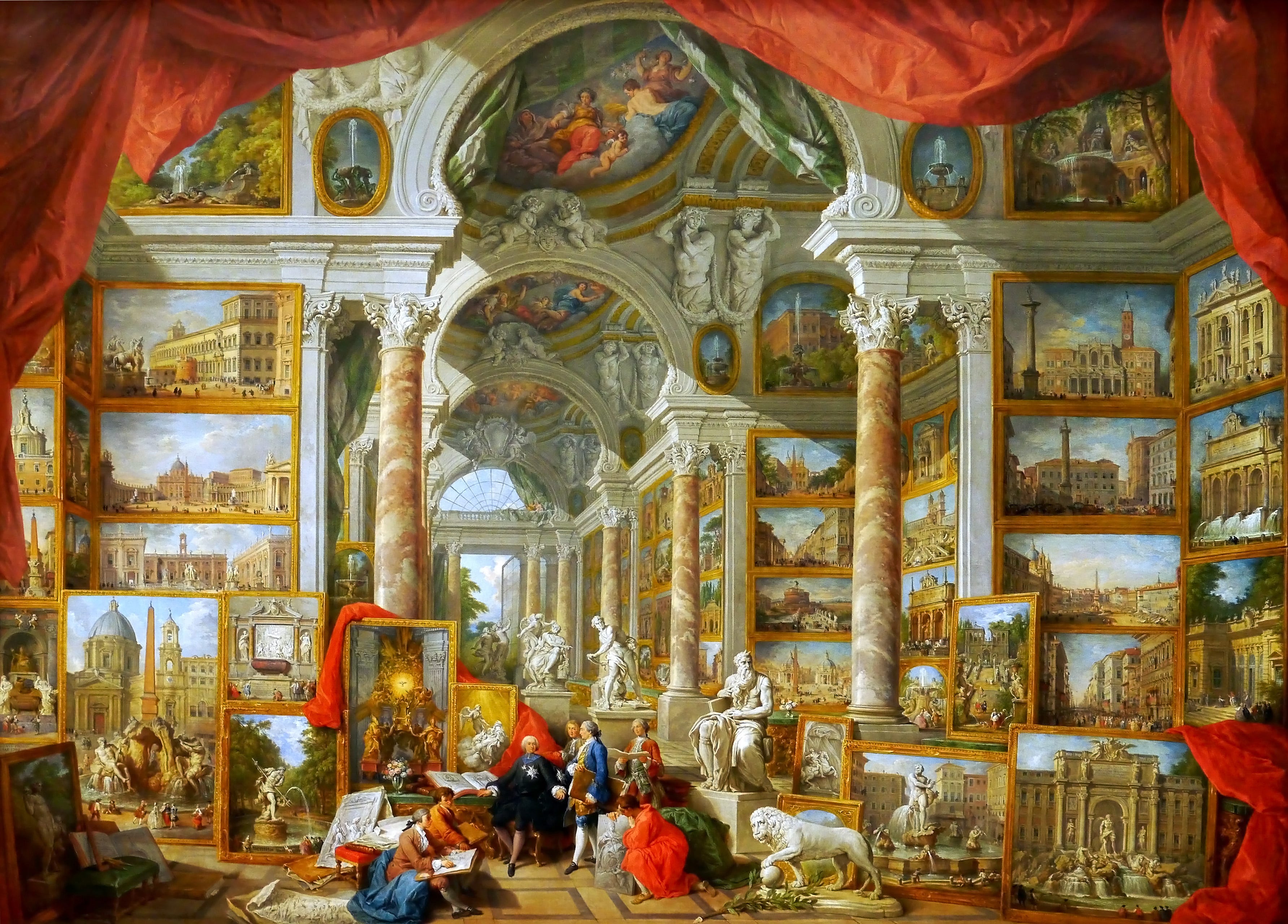
Non-artists must not just appreciate our White artistic treasures passively; we need active art appreciation. Primarily, active art appreciation involves physically protecting cathedrals from ongoing Muslim vandalism. Understanding that our museums have Christian images, as well as a treasure trove of evidence that Europe is a White civilization steeped in White genius, Leftists will soon encourage Muslims to join them in verbally and physically attacking museums. At that time, active art appreciation will require protecting the museums as well. Art marks territory. As such, active art appreciation means parading our icons through the streets of White cities and towns.
Additionally, we must purposefully and aggressively parade our icons in areas wherein non-Whites have settled. Our forefathers fought enormous battles for that land. Non-White communities at best exist as guests on that land. Parading sacred icons throughout our territories reaffirms our ownership. We must also militantly protect all public statues. You can make a White man hungry and he still has his soul. If you take his past from him, you turn him into an animal; you have killed that which gives him dignity and which might give him the model for regrouping, for a renaissance. As such, whether we agreed with the subject’s political position or not, we must consider all public statues of White men sacred relics of our forefathers.
As embodiments of our collective soul, the Left toppling our statues constitutes a real genocide. We must not let that happen to our race. We need modern versions of the ‘Fighting League for German Culture’ to provide armed security for every threatened statue. We must also establish a holy perimeter around such statues.
Via these acts of active art appreciation, we can start to reconquer ourselves and our lands.
Our Christian Roman catacombs, Romanesque statues, Gothic Cathedrals, Renaissance and post-Trent art, as well as our somewhat secular Etruscan, Greek, Crete, Roman, Mannerist, Baroque, Rococo and academic arts convey White genius. These are not the products of humanity. White art exists in White museums, on White land in White civilizations that Whites built and White warriors protected. Your ancestors made this work as a message to you, not humanity. This is your legacy.
As a place where your ancestors still live, silent reverence and genuflecting are not out of place in a museum. In fact, anything less than veneration is inappropriate. When we have festivals celebrating our icons, in the mode of Medieval fairs, our ancestors join us. When White fighting leagues gather to protect our ancient art, our ancestors stand with us. Protecting our ancestors’ art shows them the gratitude and honor they deserve.
READ MORE:
OUT NOW - A Call to Arts: The History and Mission of Western Art

From prehistoric cave paintings to the monuments of the twentieth century, White Western Civilization has been creating, cultivating, transforming, and marveling at art for tens of thousands of years. Art is an essential building block of Western identity, showing the deep continuity and exhilarating spirit of European culture throughout time and space.
Artistic and racial snobbery imply social snobbery and aristocracy. Aristocracy connects the arts and war. The Medieval lord of the land not only owned the castle and peasants, but defended them. When the king called, a lord who refused the duty of protecting his women, culture and land lost their position and honor. And to an aristocrat, honor meant everything. Embodying the slogan “Death before Dishonor,” in aristocratic times slights regularly led to deadly duals. Opportunities to widen one’s realm and influence came from victory in battle. Nobles neither respected nor admired kings who did not give them the opportunity to use their warlike energies; as such, they pushed kings towards the battlefield. Nobles’ leisure was an extension of their military adventures. When not at war, knights still risked their lives in jousting. And when firearms became available, they hunted, hunted, hunted. Their frivolous entertainments such as gambling and horse racing displayed their bravado. Their lavish homes displayed their pride, power, and greatness.
The pre-modern aristocracy engaged in endless flexing theatrical display. This included not only lavish clothes and homes, but incredible art collections. These displays of excellence and status employed seamstresses, tapestry makers, makers of furniture and silverware, gardeners, musicians, architects, armor makers and other craftsman. Aristocrats also often paid for church expansions, including familial funerary monuments and chapels. The huge wealth that the Medieval Church had accumulated by the early 16th century mostly resulted from its close involvement with aristocratic power at every level. The waning of Christianity’s influence led to fewer Crusades, and hierarchy became less steep. Still, the upper strata proved their elite stature by going on dangerous Grand Tours, wherein they came to know Whites’ best. Their elevated taste infused architecture and public monuments.
Therefore, the White aristocratic perspective still surrounds us in the impressiveness of White music, art, monuments, and buildings. Contemporary Whites must also carry themselves with pride and dignity born of connection to their mighty ancestors.
Just as God does, the beauty at which art hints suffuses the universe. While angels see no borders, we live in the Chain of Being. Humans, imperfect and blind to such high frequencies, unable to see pure light, in this fallen material world, sustain themselves in race-based cultures and nations. If we do not provide for our material needs, we die. At the other extreme, if we forget society’s spiritual and moral requirements, we perish.
Art perfectly exemplifies our existence in the Chain of Being by using physical means to represent spiritual lessons. Angels do not make art, but angelic humans do. Artistic creation emerges from and speaks to populations in historical situations. Much of our art aims to praise God. But God did not make us angels, he put us in time and space; God did not make us for slavish worship, he made us White men. He tests and strengthens us via battles for land in historical times. We should see our current struggles as an opportunity to grow.
Though ordered, levels on the Chain of Being are not discreet. As they have never been separate, race, church and state must reinforce each other. In addition to protecting our lands and supporting morals that honor our Christian traditions, White governments should support art academies and then fund the construction of integrated architectural, painting and statuary works that inspire us. This, in turn, will challenge each of us to live and die with honor; honor that comes from using our minds in the way a Greek would; fighting with the collective resolve of a Roman; and feeling the Christian sense of collective morality and beauty that has gotten us through winters from the times of cave painting. As Sedlmayr argued, this feedback loop, wherein great art reminds us of our forefathers and inspires our churches and governments to create great art, points the way forward.
Yet, such a feedback loop requires you, dear reader, to display the heroic morals and martial behaviors your civilization’s art promotes; the art must move you emotionally and physically; you must engage in active art appreciation, by organizing and defending your precious, ancient, irreplaceable artistic legacy.
This is an excerpt from A Call to Arts by John K. Press, brought to you by Arktos and available on Amazon:
From prehistoric cave paintings to the monuments of the twentieth century, White Western Civilization has been creating, cultivating, transforming, and marveling at art for tens of thousands of years. Art is an essential building block of Western identity, showing the deep continuity and exhilarating spirit of European culture throughout time and space.
Today, in the shadows of the engineered degradation of art and the hostile takeover of Western lands via mass migration, the peoples of the West must rediscover, defend, and reinvigorate their unique artistic heritage.
In A Call to Arts, Dr. John K. Press unveils a wide-ranging overview of the history of Western art, chronicling the major eras, figures, and artworks from the grand contexts to the finest details. Each work of art emerges not merely as a sample of beauty and sophistication, but as a reminder of the need and the means to uphold Western Civilization against collapse and invasion. In the panoramas and visions explored by Dr. Press, old churches and museums resurface as creative rallying points for a new Reconquista and Renaissance.