


One of the more recent digital phenomena is that of the manosphere: the rise of online influencers ranging from men’s rights activists and masculinity influencers to pick-up artists and others. Many of these are themselves products or by-products of other online spaces such as the red pill community, which refers to a sphere of “thinkers” who modelled the name of the community as a reference to the red pill in The Matrix, where it means supposedly being able to wake up from illusion and see the world as it truly is.
Some of the manosphere’s claims pertain to how radical feminism has damaged relations between men and women, how women value status, confidence, physique, money, and dominance over them, and how marriage and family are risky for men. This part of the online world shows that something has gone wrong when young men feel the need to search online for discipline, masculine identity, authority and fatherly guidance.
If one is to be fair to the manosphere, there are problems it has identified correctly, such as overt sexual liberalism, extreme or third-wave feminism, the breakdown of the family, atomisation linked to individualism, and mass consumer culture. From a Traditionalist perspective – referring to the 20th century school of thought associated with René Guénon, Frithjof Schuon and others, not traditionalism with a small ‘t’ – much of this is seen as part of horizontality, i.e., mass society, quantity, individualism, and materialism.
But the problem with the manosphere is that the solution it proposes is also horizontal, based on the same properties it criticises, namely “a high-value man”, “body count” and other such criteria, which are by-products of mass society, quantity and materialism. In other words, the manosphere thinks it is revolting against liberal modernity, but it speaks and counts in the very same language that gives liberal modernity life.
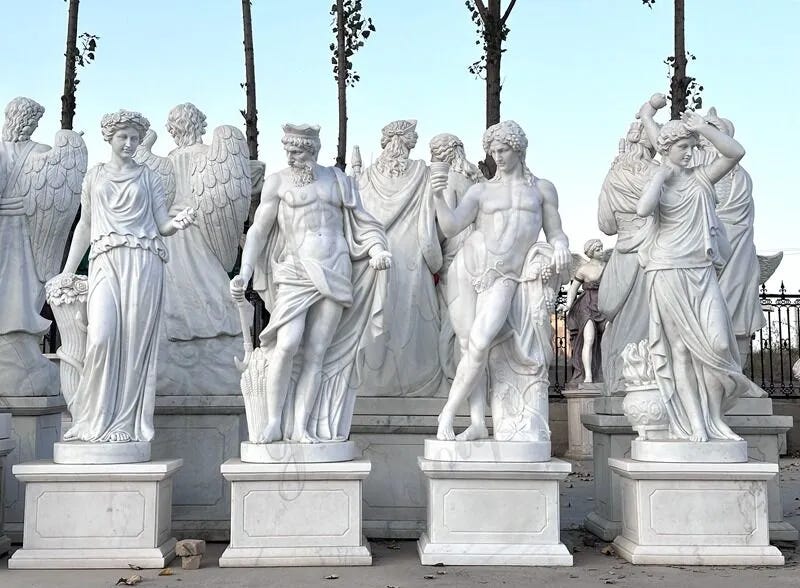
Through its attempt to create a type of traditional masculinity, the manosphere tries to unconsciously summon what psychologist Robert Moore and mythologist Douglas Gillette, influenced by Carl Jung, called the mature masculine archetypes: the King, the Warrior, the Wizard and the Lover. Archetypes are symbolic patterns of recurring human behavior that appear across myths, religions, cultures, and everyday life since time immemorial. From a Traditionalist perspective, liberal modernity is not the absence of tradition, but its inversion. Higher, transcendent principles are not so much denied as they are unconsciously parodied, turned into shadows of the real thing, flattened and turned upside down. Authority is used for domination, competent hierarchies become status, freedom becomes individualistic and rootless, and what should be vocation and competence becomes personal branding. Liberal modernity does not abolish the archetypes of the King, the Warrior, the Wizard or the Lover — or their female counterparts. Rather, it corrupts them into their horizontal parodies.
The King represents self-control, rule, and the ability to put in order a household, a business, a job, a people, or a country depending on the occupation. His corrupted manosphere version is the “alpha male”: status obsessed and a ruler of nothing. The Warrior represents courage, discipline, sacrifice, protection, loyalty and the willingness to defend that which is sacred. In its corrupted manosphere form, he appears as a well-trained gym body, without chivalry or anything worthy to protect beyond his body. The Wizard represents wisdom, guidance and the transmission of knowledge to the next generations. In his corrupted manosphere form, he becomes an influencer advising young men on how to treat and manipulate women and others. The Lover represents love, attraction, beauty devotion, courtship, and marriage binding man and woman to future generations. In his corrupted manosphere form, he becomes the pick-up artist, the seducer, the hunter and the collector of bodies. These figures are not manhood — they are broken, corrupted fragments severed from meaning, family, and duties towards others. This reduces man to a commodity.
Men are not the only ones damaged; women have been damaged as well. Women working or assuming leadership roles should not be discouraged. However, due to extreme feminism and the toxicity of mass society, women have been detached from motherhood, which can be seen in low birth rates, weakened loyalty – this applies to men as well – and broken continuity. Women have been encouraged to pursue careers, which in itself is not bad, while being culturally discouraged from having children; in fact, freedom is being sold to young women as freedom from men, family, and obligations to one’s community, nation, and civilisation, which are aspects that give the deepest meaning to humans.
Perhaps the most striking is how here too, the female archetypes have been inverted in an echoing way as have the masculine ones: the Maiden, Mother and Crone or Matriarch. Like the male archetypes drawn from Moore and Gillette, these are ancient archetypes found in myth, religion and later Jungian psychology. The Maiden represents purity, curiosity, potential, beauty and the threshold of maturity; in her inverted form, she becomes sexual commodity, eternal adolescence, a woman who measures her worth through attention and desirability, personified by the modern “hot girl” influencer. The Mother represents fertility, nurture, sacrifice, protection of life and generational continuity. In her inverted form, the mother archetype is rejected as oppression. The Matriarch represents feminine sovereignty, grace, loyalty, household order, and nobility. In her inverted form, she becomes the “girlboss”, a bitter anti-mother figure representing status through career, gracelessness, and domination without tenderness. This too results in the commodification of woman.
However, the isolated commodification of man and woman is not the worst part — worse is the tragic dance of corrupted, inverted archetypes that feeds itself. The alpha male – the corrupted King – seeks the hot girl, not the dignified, healthy Maiden. The pick-up artist’s mission is to collect bodies instead of the Lover’s union, whose aim is marriage, the unity of male and female, and continuity. Thus, the seducer produces the mistrustful, commodified woman, who then confirms the cynicism of “the red-pilled man”; that cynical man in turn makes women believe men are unworthy of loyalty. The girlboss hates weak men but often embodies the masculine hardness she claims to oppose. The inverted mother archetype, which sees motherhood as burden and oppression, creates the corresponding figure of the unreliable man who avoids commitment and family life. Each inverted archetype attracts its opposite, then blames the other for how men or women are today, when in reality both participate in the same horizontal logic of modernity, meeting not as original archetypes, nor only as inverted ones, but as commodities, strategies, brands and wounds. In horizontality, men and women do not meet under a higher order or mission, but as individuals competing inside the marketplace.
The Traditionalist solution to the above is restoring verticality. Here, verticality means that men and women are not seen as interchangeable, as liberal modernity and horizontality would have it, nor as enemies, but as complementary to one another. Instead of the inverted archetypes producing the tragic dance above, the two in their healthy archetypes should aim towards a shared sacred task and mission: forming a household, having children, and building a life focused on duty not only towards one another and their children, but towards their broader society, nation and civilisation. These are duties they fulfil through their original healthy archetypes, such as the King, the Warrior, the Wizard, the Mother and the Matriarch. Through this, they reclaim deep meaning in life, because they are oriented towards serving the sacred and the transcendent: something higher than themselves, their own ego, autonomy, and resentment, unlike their inverted archetypes.
In such a vertical order, the King becomes the ruler of his household, his work, his vocation, his duty to serve in the nation’s army if required by law, and his duties towards wife, family, society, nation, and civilisation. The Warrior, in his natural and healthy form, embodies courage, protection and loyalty towards family, nation and civilisation. The Wizard embodies wisdom, guidance and the transmission of knowledge through generations, linking the dead with those still alive. The Lover becomes courtship with the aim of marriage, fertility, and continuity, instead of seduction and body counts.
From the woman’s side, the Maiden embodies anew beauty, curiosity, and preparation for maturity, and the Mother embodies fertility, nurturing, the protection of life, and not oppression. The Matriarch embodies graceful authority, memory and order, not the bitter girlboss. Just like their broken counterparts, these healthy archetypes and the duties they are bound to do not remain isolated, but create an organic harmony in verticality: they stop being competitors in a marketplace and become members of a household, a people, nation, civilisation, and finally, an order that transcends them all. That is not to say that this would be a solution that would fix everything and bring a Traditionalist utopia, or that there would be no more divorces or problems. Historically, whenever one has tried to create a utopia, a dystopia followed instead — but it is a meaningful idea to strive towards as a society.
Despite all this, some manosphere advice remains useful for young men, such as training, working, becoming disciplined, developing courage, and mastering oneself. In Traditionalist terms, however, all of this remains horizontal as long as its primary motivation is ego, money, sex, status, or personal branding. From this perspective, what men need is initiation: being ordered in something bigger and higher than oneself, such as God, people, family, society, nation, civilisation, one’s craft or vocation, duty, ancestry, continuity, and the ability to sacrifice for them. Women too should not be reduced to corporate individualism – another form of commodification – or sexualisation, but need the restoration of femininity, motherhood, spiritual depth and civilisational memory.
The manosphere is a broken revolt against real problems and societal disorder. It has fragments of truth in its claims, such as that extreme sexual liberalism, radical feminism, atomisation, and consumer culture have damaged women and men. But its answers are horizontal: ego, commodification, quantification, and the corruption of human archetypes.
The answer is not the alpha male, the pick-up artist, the hot girl influencer, the girlboss or the liberated woman of modern ideology. The answer is the vertical restoration of manhood and womanhood in their proper form and order, and the creation of conditions and institutions under which they can thrive: husband and wife, father and mother, protector and nurturer, ancestors and descendants.
READ MORE from Arktos: Julius Evola’s The Woman Problem — a collection of the Italian Traditionalist’s writings on womanhood, sexuality, feminism, and modern relationships — is hot off the press from Arktos:


Thank you for the article. This problem is not talked about enough even in Traditionalist or adjacent circles
That was a very interesting article!