


Most citizens in Western nations have no conception of who the people who control their destinies are. Thoroughly indoctrinated in the account of reality provided by parliamentary democracy, they sometimes even believe that elected officials are actually the ones who wield power. This is tragic, but given that we live in a society where reality is selectively conveyed by comparatively few actors, it is not particularly surprising.
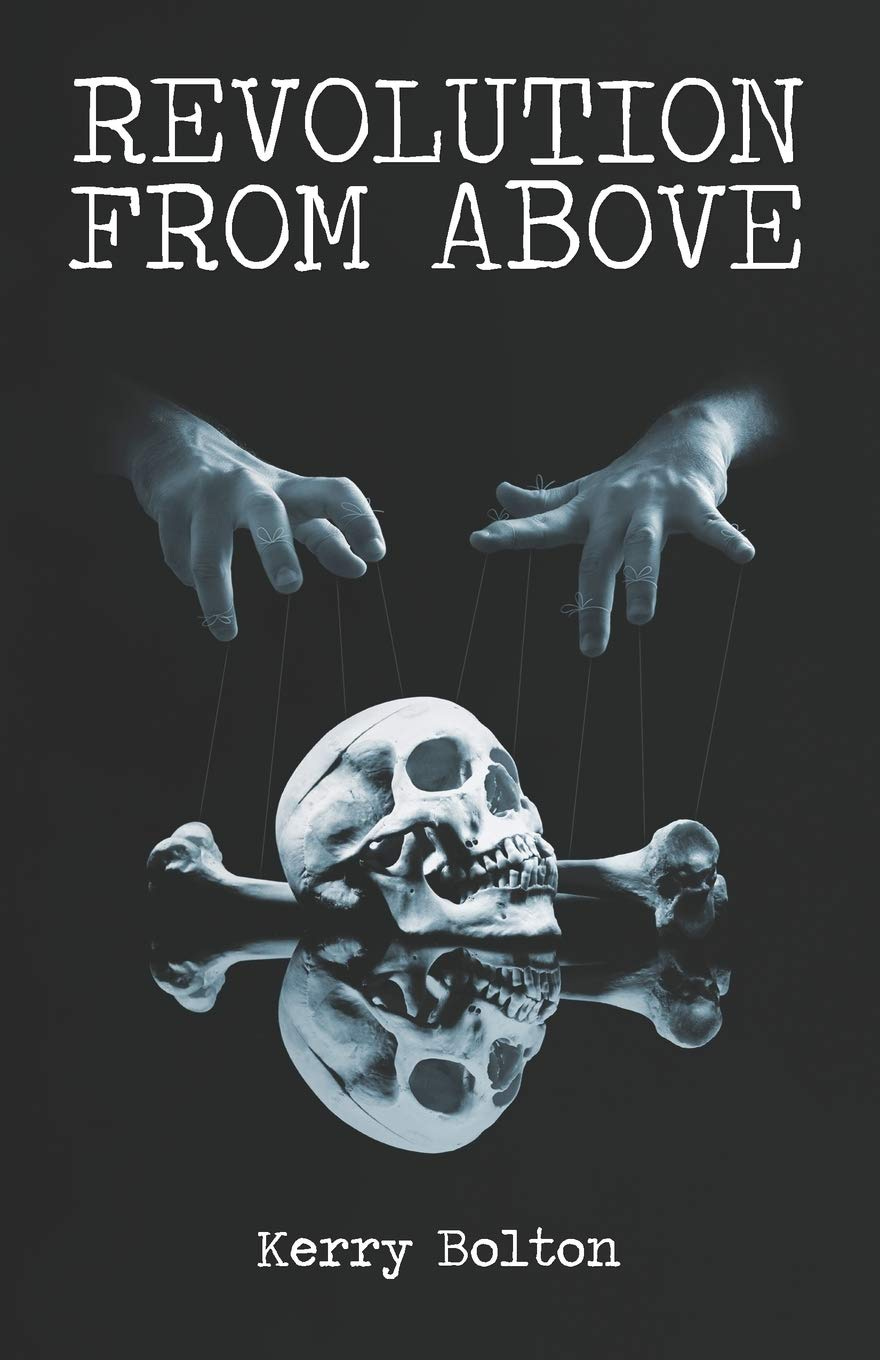
An effective antidote to such delusions can be found in Kerry Bolton’s Revolution from Above (2011). Bolton has an academic background in, among other things, historical theology, and has written for both academic and popular-cultural media. In Revolution from Above, he studies the real actors who wield power, reaching a number of conclusions that make many of the myths and illusions of our time crumble.
The Dialecticians of Capital
“There is no proletarian, not even a Communist, movement that has not operated in the interests of money, in the directions indicated by money, and for the time permitted by money and that, without the idealists among its leaders having the slightest suspicion of the fact.”
– Oswald Spengler
Bolton identifies a number of wealthy dynasties that have had a decisive influence on English and American politics. These predictably include the Rockefellers, and names such as Ford, Warburg, J.P. Morgan, and Rothschild also appear. The fact that these dynasties have been able to create networks to advance their interests is, fundamentally, not a particularly astonishing idea. During the 1960s, they even allowed the historian Carroll Quigley to study their secret documents. In his magnum opus Tragedy and Hope, Quigley concluded that:
“… there does exist, and has existed for a generation, an international Anglophile network which has no aversion to co-operating with Communists, or any other groups, and frequently does so. I know the operations of this network because I have studied it for twenty years and was permitted for two years, in the early 1960s, to examine its papers and secret records. I have no aversion to it or to most of its aims and have, for most of my life, been close to it and to many of its instruments.”
Bolton argues that Quigley incorrectly describes the network as Anglophile, since it is more accurately described as globalist. Quigley also describes how these networks of extremely wealthy actors operate; to a large extent, these operations are based around foundations and think tanks. Through such organizations they can, among other things, finance movements that promote their objectives, as well as establish contact with other important actors.
Most people today are accustomed to regarding McCarthyism as a dark period in U.S. history, during which the establishment, under the leadership of the bigoted McCarthy, relentlessly hunted down communists for no real reason. Quigley and Bolton offer a different account of events, showing that McCarthy was suppressed by the plutocratic dynasties when his activities threatened to expose their connections to cultural radicals and lead to a renewed American nationalism. When investigations began into the purposes actually being sponsored by various foundations, the plutocratic dynasties used their contacts in the media and politics to silence McCarthy and his supporters, just as they had used them against, among others, George Wallace, Pat Buchanan, and Ron Paul.
Follow the Money: The Left as Useful Idiots
“[I]t is evident that it was the plutocrats who sponsored the ‘march through the institutions’ to lay the intellectual basis for the ‘revolution from above’.”
– Kerry Bolton
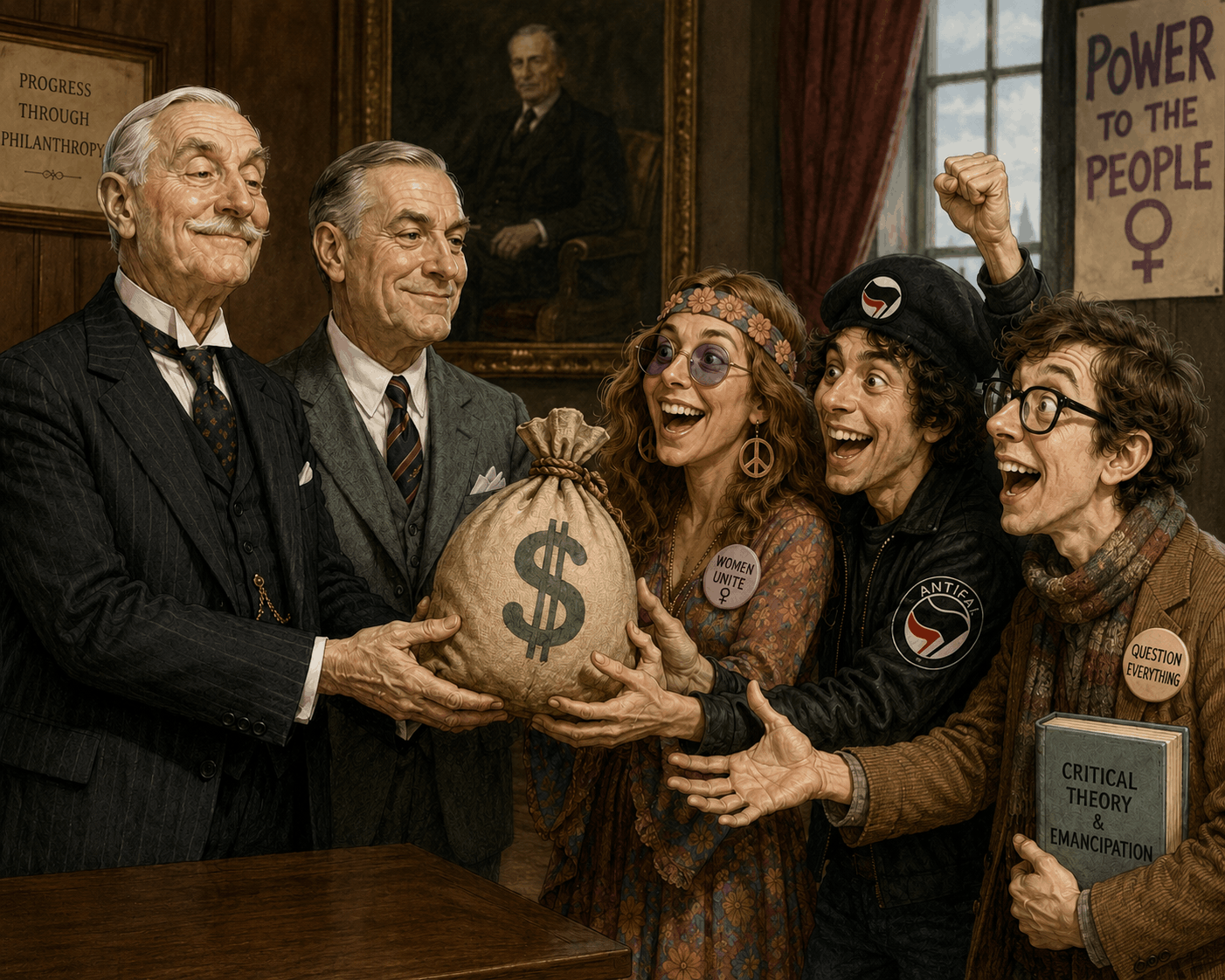
These dynasties have pumped vast sums of money into things that are today regarded as “anti-capitalist”. In this context, the boundary between anti-capitalist and pro-capitalist is rather blurred. Bolton shows how Herbert Marcuse worked for the OSS, the predecessor of the CIA, for several years (interestingly, the early recruits to the OSS came to a great extent from powerful families such as Morgan, Mellon and DuPont). In fact, Marcuse was sponsored by the Rockefeller Foundation to write both One-Dimensional Man and Eros and Civilisation. The Rockefeller Foundation also contributed more than $200,000 to enable exiled Frankfurt Marxists to establish new careers in the United States, where, among others, Adorno and Marcuse went on to exert a powerful influence over the entire intellectual sphere. It is doubtful whether today’s cultural Marxism and political correctness would have emerged at all had these intellectuals not been integrated into the American academic sphere, something that was thus financed by capital itself.
Kerry Bolton’s classic Revolution from Above, featuring well-documented information rather than “conspiracy” speculation, is available from Arktos and from Amazon.
“The entire LSD movement itself was sponsored originally by the CIA to whom I give great credit.”
– Timothy Leary
The conclusion you reach when reading Bolton’s well-researched book is that either the big capitalists were too stupid for their own good, or today’s cultural radicals are useful idiots of big capital. For example, it turns out that Alfred Kinsey’s influential studies of human sexuality received substantial financial contributions from the Rockefeller and Ford foundations. Similarly, Timothy Leary’s psychedelic experiments were financed by the CIA, while financier George Soros today is one of the leading sponsors of efforts to legalize marijuana. As a left-wing radical, one must therefore either conclude that the CIA and Soros are philanthropists, or else it appears that they regard drugs as a profitable market and/or a new form of social control. The same applies to things such as queer theory.
Bolton also shows how the CIA long sponsored non-Stalinist communists and the Left in general, even when they were openly hostile to the United States. In connection to this, he also traces one of the roots of today’s neoconservative movement: several neoconservatives have backgrounds as fiercely anti-Soviet leftists. He also encounters the explanation that the plutocrats promoted a more extreme and violent Left so that their own attempts to move the United States in a direction that could be described as “left-wing” would appear more moderate. Persistent reports also maintain that the “youth revolt” of 1968 in France was started by the CIA in order to clip the wings of de Gaulle, who was too anti-American in his policies. This has been claimed by, among others, Georges Pompidou, de Gaulle’s prime minister, and fits well with today’s “spontaneous” revolts in countries such as Serbia, Georgia and Iran, which begin as youth protests and later turn out to have been organized and sponsored by foreign actors.
“But if there were such a conspiracy, I would have read about it in the newspaper, because there’s always someone who can’t keep quiet…”
“There has long been a current of thought among socialists that the working class is too conservative to conduct a revolution and that socialism would best be achieved by stealth. In the English-speaking world this is known as Fabian socialism… in her autobiography, Our Partnership (1948), Beatrice Webb describes how she and her husband Sidney, founders of the Fabian Society, were provided with funds by the Rothschilds, Sir Julius Wernher and Sir Ernest Cassel, to establish the LSE [London School of Economics]”
– Kerry Bolton
Bolton shows how most of the movements we today regard as “radical” were sponsored by the dynasties, perhaps particularly through the Rockefeller and Ford Foundations, and/or by the CIA. This includes the psychedelic revolution, feminism (with Gloria Steinem as an example), Kinsey’s sexual radicalism, Partisan Review, et cetera. Bolton also demonstrates the very strong connections between progressive media darlings such as Al Gore and Barack Obama on the one hand and powerful plutocratic actors on the other.
Bolton does not, however, consider the dynasties stupid. When they support subversive and antisocial movements, it is because doing so serves their interests and offers opportunities for new forms of social control. Thus, for example, drugs play an important role in Huxley’s Brave New World, while already Plato argued that the family must be replaced by the state when children are to be raised. According to director Aaron Russo, he was also allegedly offered the opportunity to become part of the network in conversations with Nicholas Rockefeller. Rockefeller is said to have explained the Rockefeller Foundation’s extensive contributions to feminism by saying that the goal was to get “the other half” into the labor market and replace the family with the state. Rockefeller’s cynical manner of expressing himself led Russo to decline the invitation and instead speak out on Alex Jones.
Overall, Bolton’s book is a gold mine. He shows how the seemingly spontaneous revolutions in countries such as Egypt and Tunisia were prepared over several years through contributions from, among others, Soros, and how the plutocrats today are turning their attention toward Iran and Burma. Here, the issue is often opening countries’ markets to the plutocrats; countries that, like Libya, Iran and Burma, seek a more independent policy are therefore lucrative targets (Bolton also shows how the fall of apartheid had more to do with economics than racial issues. When the ANC took power in the country, it carried out extensive privatizations that opened South Africa up to the dynasties). The connections between the dynasties and political power are also extensive, among other things through organizations such as the Council on Foreign Relations, and the overlap between the dynasties and the OSS/CIA already mentioned.
Bolton does not go into greater detail on theories that describe the dynasties as exclusively ethnic (Jews, lizards, et cetera). Nor does he describe in detail how they influence the media, a subject that would otherwise have been of great interest. But taken as a whole, Revolution From Above is an indispensable book that every politically minded person should read, especially those that regard themselves as supporters of popular government and democracy.
The power of these dynastic families can be regarded as nothing other than a mockery of any notion of popular exercise of power; on many occasions these interests have also directed American military power against sovereign nations, with enormous human suffering as a consequence. Bolton’s book should also be therapeutic reading for the useful idiots who seriously believe that queer theory, multiculturalism and drug liberalism are incompatible with the interests of big capital. He covers a number of important areas, ranging from the dynasties’ role in the Western powers’ betrayal of the White forces during the Russian Civil War to how the Rockefeller Foundation and the CIA sponsored modern art.
This is a book that will change the way the reader sees the world; at the same time, it is well researched, well sourced, and thus can hardly be regarded as “conspiracy theory” in the negative sense of the word. Just as even a paranoid person can have enemies, conspiracies can exist whether one is aware of them or not.