



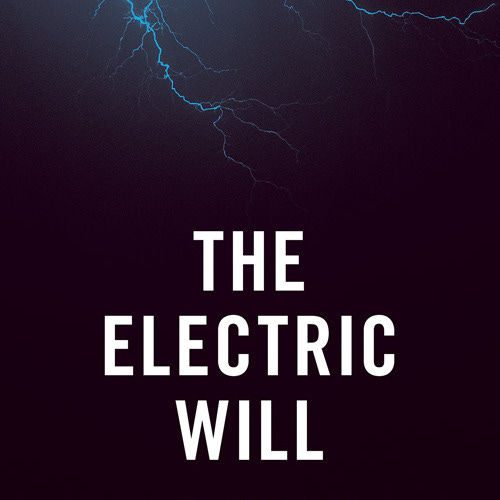
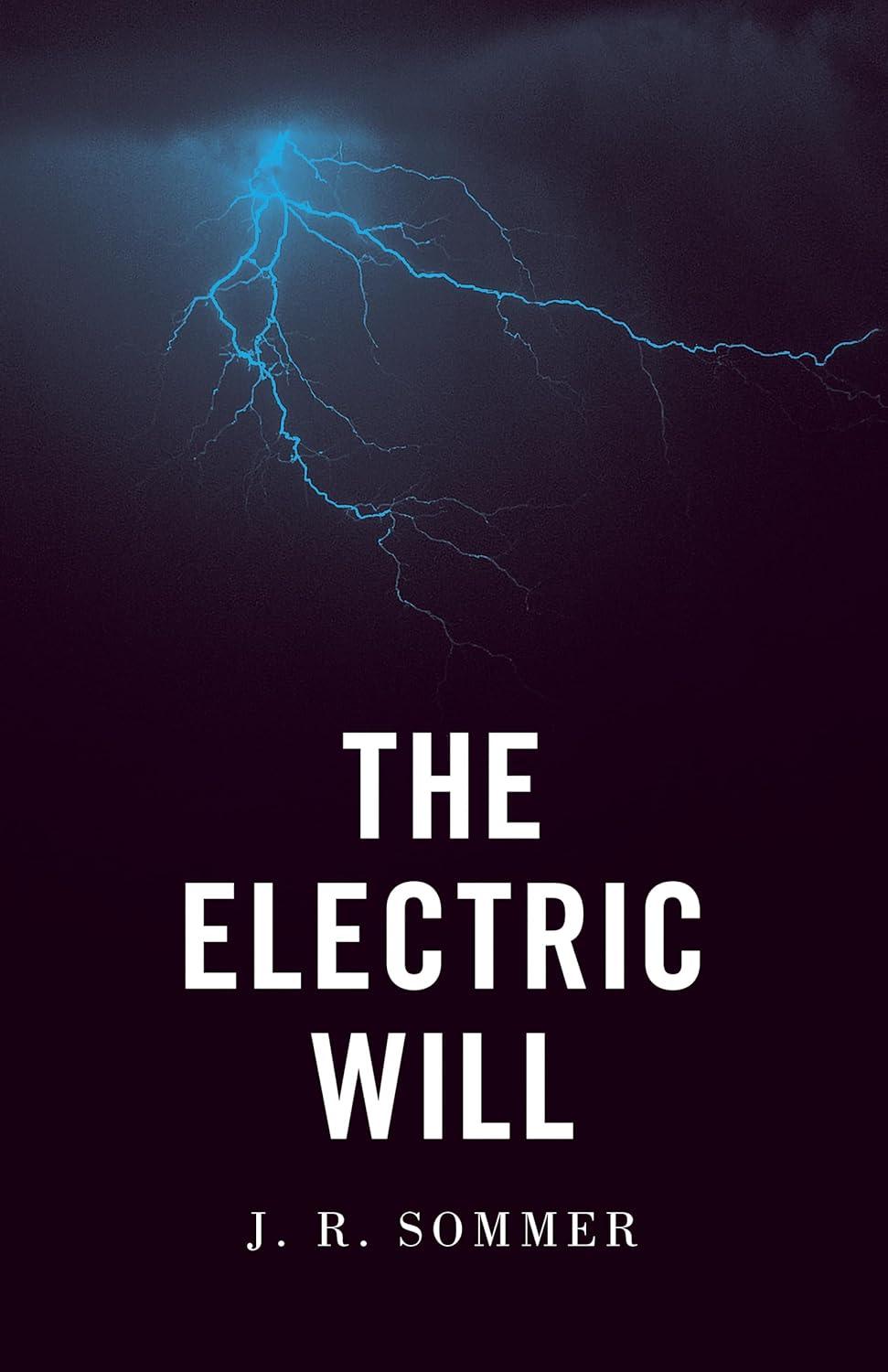
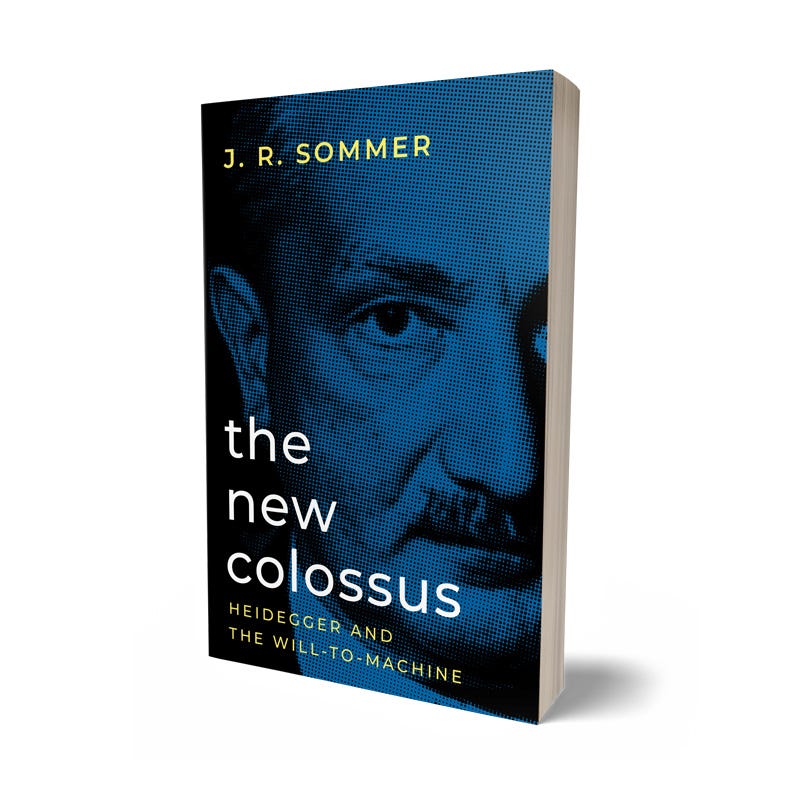
Leaping forth in the wake of The New Colossus: Heidegger and the Will-to-Machine, J. R. Sommer’s The Electric Will is a philosophical–poetic meditation on the dynamic nature of existence, will, and divinity. At once a critique of modern rationality and an existential summons, the book identifies and explores the peculiar metaphysical “will” animating human life and consciousness.
On a philosophical journey through mythological, theological, and literary allusions, Sommer shows how humanity’s striving for meaning, progress, and morality reflect the will’s frenzied attempt to overcome itself.
What is to be done with this will? The Electric Will is an exercise in definition, for definition and its absence sit as the root of all things — moral, immoral, amoral.

From Chapter 22 - “Falseness of Unreality: Narcissismus terribilis”:
Few things illustrate the falseness of unreality more than sociopolitical dynamics. One hesitates to discuss these dynamics because they tend to arouse such ardor. Treading this minefield is embracing an uncertain future. That politics and society can so rarely be discussed philosophically—i.e., in light of their origins and outcomes—without devolving into fallacy says everything one needs to know about sociopolitical substantiality; and that so many get bewitched by so obviously false dynamics speaks to the illusory nature of unreality. Bewitching is precisely what occurs; think of it: that one can be so utterly convinced by a sociopolitical creed that alternative arguments proffered are only ever met with immediate and unrelenting calumny and no real discussion of philosophical merit—this describes radicalism, not reason, and dogmatism, not thought. But radicalism and dogmatism are exactly what’s required to reinforce an illusion. In fact, it could be said that sociopolitical dynamics are an illusion within an illusion. If maya is the daily struggle for existence, then sociopoliticality is the inspiriting décor. The reality of unreality is that modernity relies no more on reason and no less on dogmatism than any other era in supposed history.
Consider Alexander Dugin, the philosopher most associated in the West with modern Russian geopolitics. A fairly prolific writer, the centerpiece of his thought is, arguably, The Fourth Political Theory (2009), wherein he imagines it possible for a new theory to assimilate the good and discard the bad from the preceding three political theories—liberal-democracy (or “liberalism”), communism, and fascism. Philosophically, it seems reasonable to examine the potentialities that might arise from a veritable meritocracy of sociopolitical theories. Unfortunately, the masses are not permitted to make such examinations: their exposure to such ideas must be limited and, most importantly, properly framed.
Consider Matt McManus, a lecturer in political science at the University of Michigan. He wrote a lengthy polemic against Dugin entitled, “Just Call it Fascism” (2022) for the Commonweal Foundation, wherein he levies the following “critiques” against the Russian:
Dugin is a “firebrand”
“... deep resentment ... pervades all [of Dugin’s] work”
Dugin “considers himself a superior man”
Dugin criticizes “McDonald’s”
Dugin is “an icon of the far Right”
The Fourth Political Theory is “a schizoid mix of ... anti-liberal fist-pounding, and megalomaniacal geopolitics”
Dugin has “glaring moral and political failings”
Dugin is “clearly a minor-league intellectual figure”
Dugin’s work is “implausible,” “unjust,” “fatuous,” and ugly
Dugin is “a maniac”
Dugin’s “metaphysical speculations are ... fantastical”
Dugin defends “immeasurable human suffering”
Dugin’s ideas belong on “the trash heap of history”
And, most important for McManus, Dugin is, quite simply, “a fascist.” Case closed; no more thought necessary. The preceding list is all from one essay and the gist is clear: Dugin’s ideas—if not the man himself—are evil and must perish. McManus’ article is a token of a type: it echoes a multitude of articles with the same refrain: Enemy=Bad, Me=Good. This is modern intellectualism at its finest.
Discussion is evidently an art lost on modern academia; after all, certain ideas were meant to be “buried after Auschwitz” (McManus again). What “Auschwitz” here means is that a certain world-ideology ascended after 1945 and it is not to be questioned; if it is questioned, the examiner must be met with a torrent of scorn and slander. If one attacks the man, then the argument carries no weight—so say the logical fallacists. Governed by the dominant world-ideology, modernity enjoys the apparent luxury of being lax with logic. When the entire governmental–media–academia apparatus is structured to protect the source of its power, “logical soundness” is a fait accompli: it is so because the powerful say it’s so. Such a fact does not quite dawn on the liberal-Marxists of the world. Only if one infuses pretended logic with enough libel will the liberal-Marxist propaganda apparatus be sufficiently satisfied. This would be amusing if it weren’t so ruinous to the human spirit: the only faction who readily and routinely excoriates the “other” with impunity and without a second thought about any hypocrisy is the liberal-Marxist one. They discourage thought because to grapple with it is inconvenient.
The road to thought is hazardous, and those willing to walk it must be prepared for the onslaught of insult. It bears asking: What is the purpose of slander if the argument one encounters is so weak? Why defame the speaker when the argument is so clearly wrong? The reason the methods these questions highlight are undertaken and, in fact, are logically dubious is because we are experiencing an incredible illusion. Unreality is barely meant to be logical; in the beginning was λoγoς—but it has hardly been seen since. The logic of unreality is a continuation of the fervor necessary to inspire the next generation. Keep fighting; expand your will to the detriment of others; calumniate into oblivion; crush and consign your opponent to the “trash heap of history”—Well done! Thought or λoγoς are necessary no longer—the God of Fallacy is quite pleased! Ur-evil, after all, is life’s source; and the actions of the inane are reflections of their maker.
From McManus’ litany of libel, we might expect Dugin to be one of humanity’s greatest villains and not—a writer. One is eager to know: What would McManus wish: to imprison Dugin—to re-educate him—to lobotomize him—to bury him in the gulag—to kill him? We cannot read McManus’ thoughts, but we can be sure of one thing: Dugin’s ideas must die. Whether they die of censure or with the man, only McManus and his ilk can say.
We pursue the illusion. One must wonder why Dugin’s works are, quite literally, banned from most vendors and denigrated by “the elite” across the liberal-democratic West. Meanwhile, when local communities perceive certain books as inappropriate or immoral for their own children and therefore collectively decide to bar them from the school library or curriculum, it seems the entire liberal-democratic governmental–media–academia machine is outraged and proceeds to smear the local communities as bigoted, backwards, blinkered, and biased—in a word, evil. But Dugin, the one who offers an alternative political theory, must be banned—quite literally—from being read or examined by anyone. Dugin’s ideas must be banned with unanimous agreement, and certainly never the ideas propagated in the books local communities deem inappropriate. The provincials could not possibly know what’s in their best interest; rather, the liberal-Marxist elite must instruct them. Self-determination is a luxury only for those in agreement with the world-ideology; everyone else must kneel and kiss the ring—or else. Liberal-Marxism’s approach to self-determination occurs at both the local and international levels; and its militant intolerance remains unchanged.
Think of it: ideas must be banned—not debated, not discussed, not examined, but banned. This is like saying, That idea should die. But so many in the dark farce of unreality see this as completely reasonable—because they lack the ability to reason themselves, because λoγoς left them long ago. When the media and government lambaste isolatable local communities for trying to, from their view, protect their children by barring certain book-bound perversions from being foisted upon students, it is important to remember that these books are not being banned: one can still buy them at the local bookstore or from online retailers and will likely even hear them rapturously praised as “groundbreaking” across the sociopolitical spectrum. One who feels sociopolitically slighted by those “prejudiced” local communities can access all the barred books and read them to their heart’s content at any time; and truly, the slighted can even ensure their children study and believe all the liberal-Marxist nuances down to smallest detail—or else. But Dugin and all those like him? They are banned—unavailable and nonexistent across the social spectrum. Enemy=Bad, Me=Good.
And what is all this oppositional banning except the pulse of the electric will, the Überwille dictating the course of human history, of all existence? It is impossible that our will is our own in this dark farce of unreality. We are accomplices to a catholic criminality that we mistake for reasonable reality. Not only this, but we are inmates to an illusion within an illusion: the meta-illusion of our daily breath is the basis for the illusion of our daily bent. If we had any genuine sense, we would be disgusted with the self imagined to be ours. But we possess no such sense; and, what’s more, we are proud of our un-possessed self.
What passes for reality is a litany of libel to which we assign deep meaning. What modernity accepts as gnosis—as thought—is what makes one feel better: What material things, what sociopolitical conditions exist that ensure one’s continued happiness in the illusion within the illusion? One hardly needs to “soar above” surface dwellers, for they are buried in an abyssal pit of their own “self-determined” self-satisfaction: Narcissismus terribilis.
There is more to Narcissismus terribilis. He converts fuel into energy and expels waste like every other living expression of the will in existence; he is surrounded by ubiquitous waste; he would swim in it if it weren’t constantly carried away for him. Outside and under every community are landfills and sewer systems—where all reminders of man’s animal buffoonery are disappeared. He lives as though his life has great meaning: he paints his face, dyes his hair, wears neat clothes, stands up before his fellows and asks for war offerings, promises to make things better, and tells the masses of a divine mission. Narcissismus terribilis must be from God—because nothing else can make expelling waste look so good or underwritten with such obvious desperation; we would do well to remember this the next time we see the politician promising, planning, or electioneering—or the next time we look in the mirror, for we are only reflections.
A new rendering of the great Darwin, expeller of waste across the oceans: On the Origin of Reflections: The Devolution of Man through Megalomania. The book’s only chapter: Narcissismus terribilis.
ORDER NOW:
Read the first volume: The New Colossus
Stay tuned:
The third installment in J. R. Sommer’s philosophical trilogy, Supreme Being: The Spiritual Foundations of Multipolarity, is forthcoming from Arktos.

I’m going to get both!
Once the sewer gases are exposed, the Left will be left very far behind. For a brilliant ontological reset, check out Reality Transurfing with Jose Moralejo on youtoob.