


Quite often, liberalism treats religion, myth, ritual, and the sacred as remnants of a long-vanished superstitious past. This is because liberalism’s anthropology places the rational individual at its centre and imagines him as secular, autonomous, and entirely post-mythological. From this emerged much of the modern legal and institutional order, based on the assumption that human beings can use reason to guide their lives, judge moral questions, and organise society.
But in its attempt to abolish myth and sacredness, liberalism has ended up creating its own secular substitutes. Equality, human rights, international law, progress, climate politics, inclusion, and similar concepts function as sacred objects within the liberal order. Whenever someone attempts to question them, not necessarily in order to abolish them, but perhaps even to improve them, they are defended with moral force by institutions, officials, and liberalism’s institutional gatekeepers, and treated as truths that must not be seriously questioned — similar to how religious priests defend their own religious truth that liberals laugh at so much.
One of liberalism’s most sacred words is equality. This can be seen in the way governments, NGOs, universities, courts, corporations, and others invoke it as if everyone already understands what it means. Yet the problem is that equality does not have one stable meaning shared by all who use it. For the religious, it may mean equality before God. Politically, it may mean equal treatment before the law. Socially, it may mean equal access to basic goods such as primary and secondary education. In a more meritocratic sense, it may mean equal opportunity to prove oneself. In its more radical form, it may mean the forced production of equal outcomes, or even the flattening of inherited traditions, identities, and forms of life.
Over the centuries, liberalism has moved through several meanings of equality, but in its most recent mutation it has arrived at equality as sameness. This means that every organic difference in nature, society, or institutional life such as role, outcome, sex, vocation, culture, inheritance, or status becomes immediately suspicious. If any hierarchy appears, the assumption is that it must have been created through some hidden or inherited oppression within the system, and that this hierarchy must therefore be corrected, flattened, and equalised through equality of outcome, representation, or status.

The problem, however, is that hierarchy is not an artificial or societal construct, as many liberals and leftists claim, but something organic, natural, and inherent to human life, present in every act of judgement, preference, and choice. Even something as simple as choosing pizza over pasta rests on an inherited hierarchy of preference, based on personal experience, taste, habit, and culture. When someone preserves the old watch or cross left by his father over a new plastic watch, or even a new Rolex or gold cross, he is acting through hierarchy. The question, therefore, is not whether hierarchy exists, but whether it is organic and rightly ordered, or artificial and corrupt.
If one looks at historical attempts to flatten hierarchy, one sees hierarchy return often in a more corrupt form. One example is the French Revolution, which dismantled the French aristocracy in a violent way - not that the old hierarchy was without corruption - only to see a new one emerge when Napoleon became emperor, created his own court, and helped consolidate a bureaucracy whose eventual elites could be as oppressive, and often more intrusive, than the old nobility.
Another similar example is the Russian Revolution, which promised the abolition of hierarchy and the ownership of work by the workers themselves. The Bolsheviks, having eliminated the Tsar and the old order — again, we say this without denying the corruption that helped provoke the Revolution in the first place — eventually created the bureaucratic order for which the Soviet Union became infamous. This new class, later known as the nomenklatura, had access to stores, housing, privileges, and forms of status unavailable to ordinary citizens, while many people had to bribe officials to secure access, advancement, or basic administrative action. The new hierarchies that emerged were often more rigid and corrupt than what they had replaced. In both cases, the attempt to abolish one hierarchy in the name of flattening difference produced new synthetic and artificial hierarchies that served power, bureaucracy, and ideological conformity.
In the modern era, a similar tendency can be observed in DEI, or Diversity, Equity, and Inclusion initiatives, which often try to flatten established hierarchies of merit and performance, however imperfect, by treating them as suspicious or inherently corrupt. Through centralised institutional programmes, they attempt to create a more “equitable” workplace by replacing differences in achievement with targets of representation. This, as in earlier examples, results in the emergence of a more rigid hierarchy based on identity politics and perceived victimhood instead of competence and contribution.
This new hierarchy is based on checking demographic boxes in order to gain access to hiring quotas, fast-track promotion, protected status, or institutional preference, especially where such behaviour is rewarded through reputational incentives, ESG frameworks, funding expectations, or compliance pressures. This creates, as in previous examples, a new class whose position is secured not primarily by the value they create for the company, but by the identity category to which they belong or claim belonging. Something similar can also be observed in sports, where biological males who identify as women compete against biological females, giving them an advantage and weakening the older hierarchy of female athletic competence and fair competition. Here again, equality as sameness does not abolish hierarchy; it merely replaces one hierarchy with another, less transparent one, in which rank is increasingly determined by identity and ideological conformity rather than performance, contribution, or excellence.
Usually, such outcomes are blamed on Marxism, communism, or socialism. There is a kernel of truth in this, since those ideologies often seek to flatten hierarchies and reduce people to equal units. Yet liberalism is not innocent either, since part of this flattening comes from its own idea of the rational, abstract individual. In its most degraded form, liberalism gives absolute priority to the individual, detaching him from communal, metaphysical, physical, and biological forms such as family, peoplehood, religion, duty, place, and sex. Once liberalism decides that man is above all a rights-bearing individual, detached from these forms, he becomes an interchangeable economic unit. The differences that once gave him meaning become secondary, unimportant, or even oppressive, because the individual is imagined as oppressed by collective identity and duty. This is where liberalism and left-wing egalitarianism meet. Stripped of collective obligations and identities, the individual does not become unique; he becomes one more interchangeable unit, much like the worker in left-wing egalitarian thought.
If hierarchies emerge naturally, either in organic or corrupted, synthetic form, then they are inescapable, whether one likes them or not. The real question, then, is not whether society will have hierarchy, but what kind of hierarchy it should have.
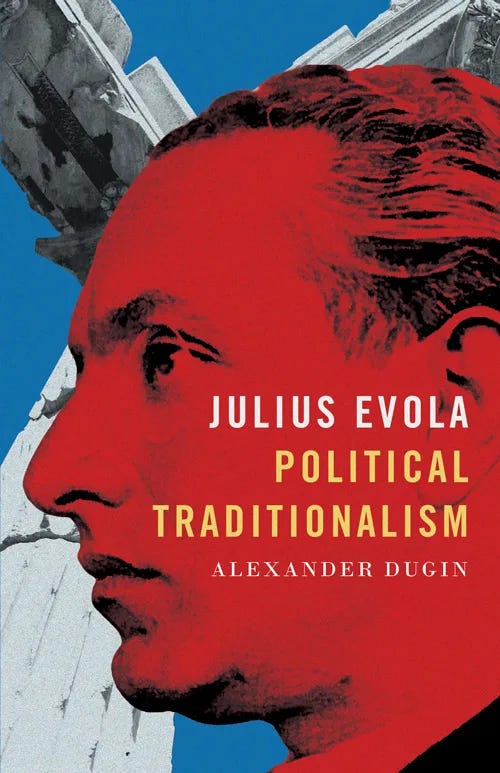
From a Traditionalist perspective — with a capital T, meaning the 20th-century school associated with René Guénon, Frithjof Schuon, and others, rather than ordinary small-t traditionalism — the attempt to flatten hierarchy, especially in the examples above, is seen as horizontal. By horizontal, Traditionalism means an orientation toward egalitarianism, materialism, individualism, uniformity, and what René Guénon called the reign of quantity: the reduction of reality to what can be counted, measured, compared, and standardised. Equality-as-sameness belongs to this horizontal view of the world because it can count and compare, but cannot understand quality: mastery of skill, vocation, office, seniority, character, or wisdom. It sees people as units, not as bearers of meaning. Verticality, on the other hand, does not see hierarchy as an accident or oppression to be dismantled, but as something that can emerge organically and express metaphysical order. The highest place in such a hierarchy should belong not to identity claims, but to wisdom, mastery and responsibility.
READ MORE from Arktos:
From this perspective, sameness and interchangeability do not truly honour people. A man who has mastered a skill is not respected by being reduced to an interchangeable unit. A person formed by one culture is not interchangeable with a person formed by another. A mother is not elevated by pretending that motherhood is socially irrelevant. Real dignity and meaning begin by recognising what a person is within his inherited identities and duties toward family, culture, profession, people, nation, and civilisation, and by honouring him according to the responsibility he bears toward them.
Thus, the alternative to equality-as-sameness should be ordered dignity. Ordered dignity recognises that people have worth not because they are identical, but because they occupy meaningful places within structured orders of family, vocation, people, religion, nation, and civilisation. In a society ordered through such dignity, the focus is not on flattening hierarchy, but on helping each person fulfil his duties within the whole rightly and nobly.
A natural, organic hierarchy is not primarily about domination or power, but about responsibility within an order, expressed through the vocations, duties, and stations of life. Equality-as-sameness tries to flatten hierarchy, but repeatedly produces more corrupt, synthetic forms of hierarchy based on quotas, bureaucracies, speech restrictions, and ideological enforcement. A hierarchy rooted in ordered dignity, however, grows through natural and organic institutions such as families, schools, churches, guilds, and local communities. These institutions do not standardise or erase difference, but cultivate persons, cultures, customs, and local forms that are excellent and beautiful within their own differences.
Man is not dignified by being made the same as everyone else, but by being formed within an order that gives him place, duty, meaning, and inheritance.

In "30,000 Years of Identity" Dominique Venner makes an interesting point about the French and Russian Revolutions. He argues that the path was paved for these revolutions by the kind of nationalization of the French kings and Peter the Great, because this kind of nationalization emasculated the aristocracies. On the other hand, Prussia survived communist revolution in the Freikorps wars because nationalization in Prussia had not historically entailed emasculation of the aristocracy.
Excellent article. Accurate in every way. My only criticism is that the word "race" is not included, as if the author was too cautious to mention it. Being that RACE is the MAJOR issue with DEI (the second being gender) I believe that it should have been mentioned.