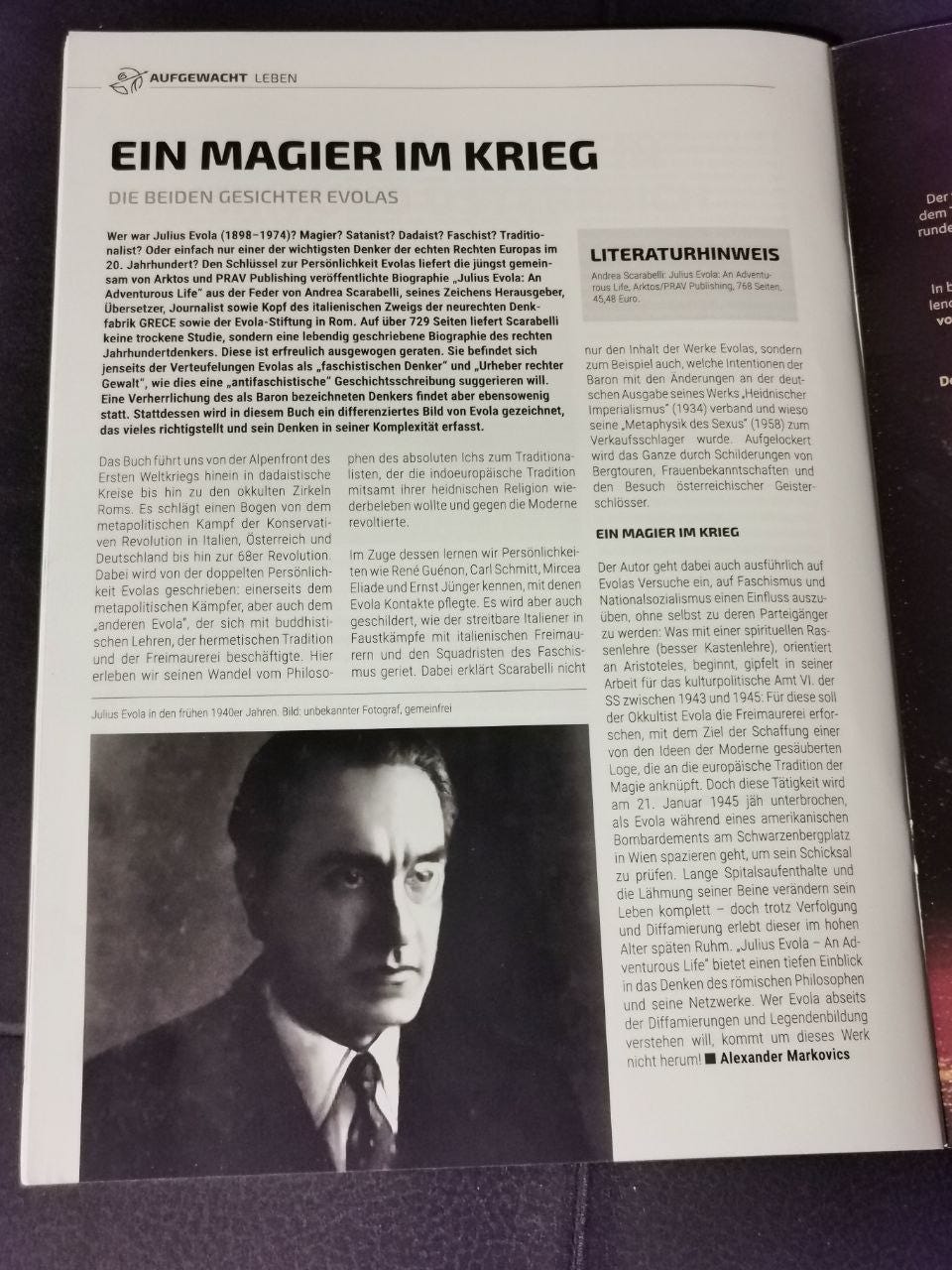
Who was Julius Evola (1898–1974)? Magician? Satanist? Dadaist? Fascist? Traditionalist? Or perhaps one of the most important thinkers of Europe’s true right in the 20th century?
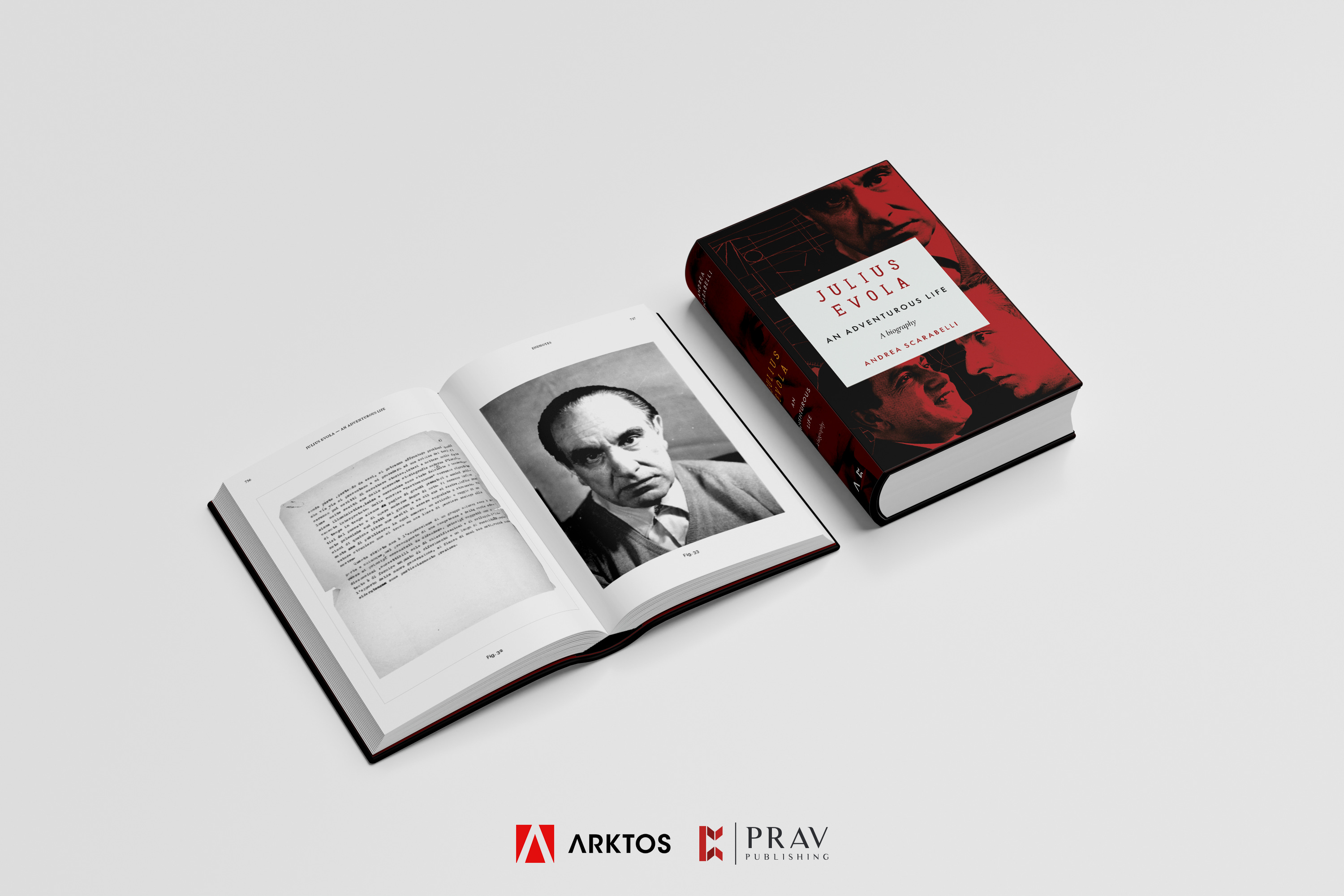
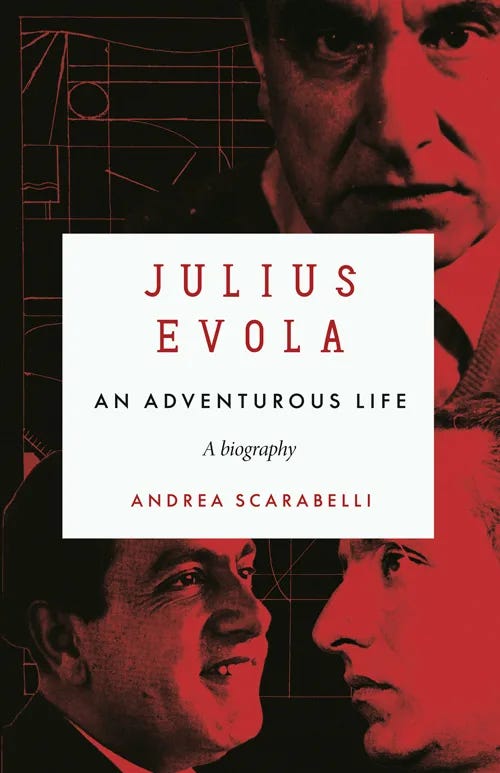
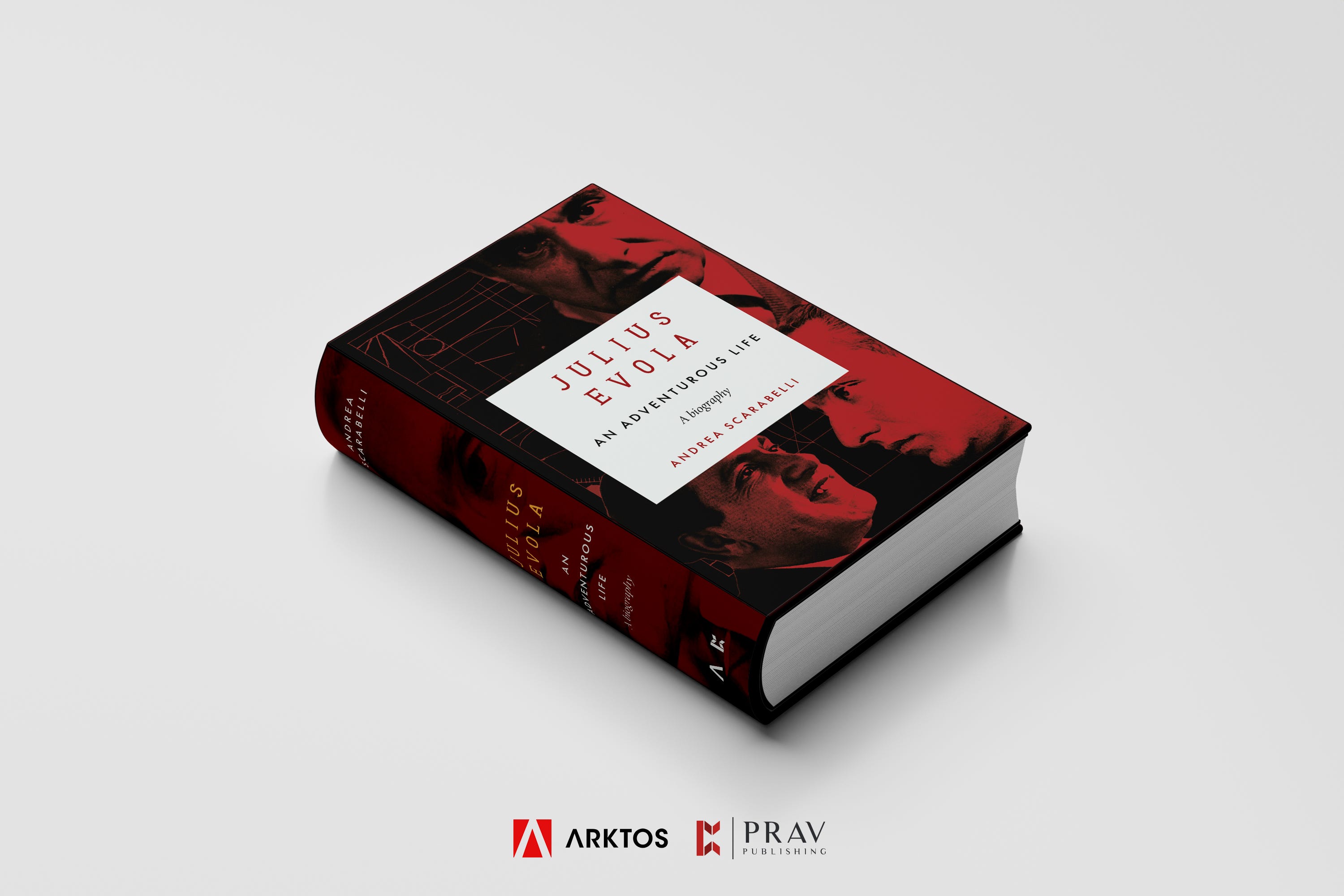
A key to understanding Evola’s figure and personality is provided by Julius Evola: An Adventurous Life, the biography recently co-published by Arktos and PRAV Publishing.
The book was written by Andrea Scarabelli, an editor, translator, and journalist who is also one of the heads of the Italian branch of the New Right think tank GRECE (Research and Study Group for European Civilisation) and the Julius Evola Foundation in Rome.
Spanning over 729 pages and featuring more than 1,000 footnotes, Scarabelli’s work is not a dry academic study, but a vividly written biography of this “right-wing thinker of the century.” Moving beyond the demonization of Evola as a “fascist thinker” and “instigator of right-wing violence” — as he is portrayed in “anti-fascist” historiography — as well as beyond the apologetic glorification of the thinker often referred to as “the Baron,” this book paints a nuanced portrait of Evola that sets the record straight on many points (such as the third first name “Andrea” falsely attributed to him), all the while seeking to capture Evola in all his complexity.
The book takes us from the Alpine front of World War I, through the Dadaist era, to the occult circles of Rome; from the metapolitical struggle of the Conservative Revolution in Italy, Austria, and Germany to the 1968 revolution in Rome. Across these venues, the book explores Evola’s dual figure and personality: on the one hand, we have Evola the metapolitical fighter; on the other, we have the “other Evola,” the esoteric thinker who delved into Buddhist teachings, Hermetic tradition, and Freemasonry.
In Scarabelli’s tell-all, we also witness Evola’s transformation from a philosopher of the Absolute Self to a Traditionalist who sought to revive Indo-European tradition—especially pagan religiosity—in a revolt against modernity.
Over this journey of discovery, we learn about Evola’s connections to figures such as René Guénon, Carl Schmitt, Mircea Eliade, and Ernst Jünger, as well as about how the combative Italian came to be embroiled in literal fistfights with Italian Freemasons and the Fascist Squadristi.
Scarabelli not only explains the content of Evola’s works, but also, for example, the intentions behind the Baron’s changes to the German edition of his work Pagan Imperialism (1934), and how his Metaphysics of Sex (1958) became a bestseller.
Beyond books, the biography’s narrative is lightened by Evola’s mountain hikes, his encounters with women, and visits to haunted castles in Austria.
The author also discusses in detail Evola’s attempts to culturally influence Fascism and National Socialism in the spirit of the Conservative Revolution without himself becoming a supporter of those movements. What begins with a spiritual doctrine of race (or rather, a doctrine of castes) modeled on Aristotle culminates in Evola’s work for the SD’s Amt VI (Office for Cultural Policy) between 1943 and 1945. For the latter department, the occultist Evola was tasked with researching Freemasonry, ostensibly with the goal of creating a lodge which, purged of modernist ideas, could reconnect with an authentic European tradition of magic.
However, this esoteric work was abruptly interrupted on January 21, 1945, when Evola went for a walk on Schwarzenbergplatz in Vienna to test his fate during an American bombing raid. Long hospital stays and the paralysis of his legs completely transformed his life. Yet, despite persecution and defamation, he achieved belated fame in his old age.
Overall, Julius Evola: An Adventurous Life offers deep insight into the Roman philosopher’s thought and his networks. Anyone who wants to understand Evola beyond the defamation and myth-making cannot do without this work.
This review by Alexander Markovics, translated and edited for Arktos Journal, was first published in German in the 8/2026 issue of Aufgewacht:
READ MORE by Alexander Markovics, brought to you by Arktos: