


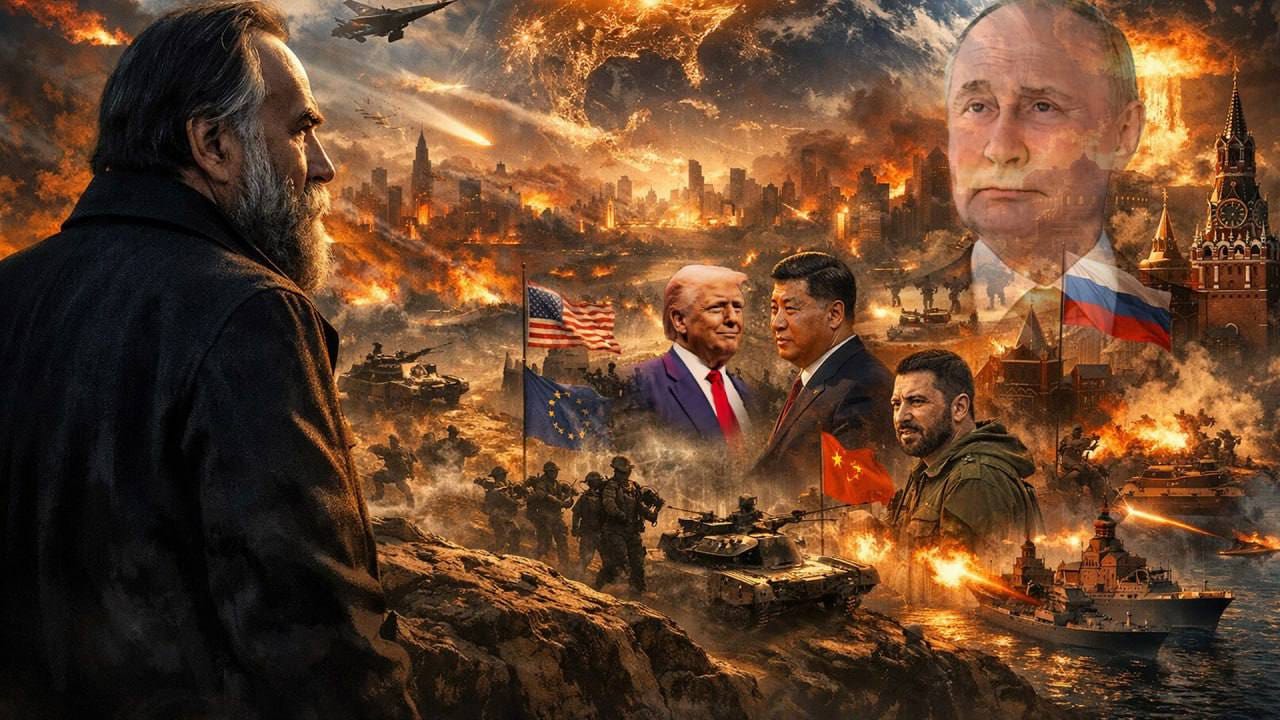
Alexander Dugin summarizes 2025 as a major turning point in the confrontation between sovereignty and liberal globalism, suggesting that 2026 will be a year of great upheaval and conflict.
What happened in the European Union in 2025? Here we see a further distancing from the US. The EU continues to adhere to the globalist agenda. Apparently, European leaders have decided to wait for the “post-Trump” era, in which they hope the Democrats will return to power and revert to the old globalist line.
Accordingly, European leaders initially tried to flatter Trump and convince him to continue the policies of his predecessors, but this did not work.
As a result, a serious rift has emerged between the US and the European Union, to the point that the very existence of NATO has been called into question. There is increasing talk in the West about the alliance coming to an end and about the interests of Europe and America diverging irrevocably. At the same time, the idea of creating a new club – C5 (Core 5) – has been put forward, which would include the following civilization-states: the US, Russia, China, India, and Japan.
Europe will not be included in this club. This model was formulated and proposed in America itself. It is an idea of a radical restructuring of the world: not the G7 or the G20, but the C5. It is “hard multipolarity” based on civilization-states, oriented towards the East rather than the West, towards the Pacific rather than the Atlantic.
There is no place in this scheme for either NATO or the EU. Japan is a natural ally of the US in the C5. Russia and China are political, economic, resource, and ideological allies. India is between them as a force that is friendly to both Russia and the US. This is a unique configuration of new geopolitics, leaving globalism, Atlanticism, and liberalism in the past. All the players rely on traditional values.
We are also seeing a conservative shift in Latin America, and even in Europe, conservative populist movements are gaining strength. If we consider the ideological factor, then in 2025 conservatism defended its right to be the leading ideology on a global scale. The importance of traditional values is being restored in all societies. The exception is official Europe, but even there, the defenders of tradition are strengthening their positions. Several countries – Hungary, Slovakia, the Czech Republic, and to some extent Poland and Italy (despite the latters’ Russophobia) – are already shifting to conservative ideological tracks.
Therefore, in terms of worldview, 2025 became the year of a sharp rise in traditionalism. Russia had been moving in this direction for a long time, and the decisive turn took place after the start of the Special Military Operation. And the “Trump factor” has shown that it is possible to move in the same direction from the other side, from the West.
The rise of global conservatism and the collapse of liberal dogmas is not a temporary phenomenon, but a global process. In 2025, a significant turning point was reached here: if globalism was previously considered something predominant, now it is the return to conservative strategies that is dominant. This applies to the West and the East, to Christian, Islamic, Hindu, and Chinese societies.
In other words, 2025 became a “year of conservative revolution” on the global scale, a major turning point in the confrontation between sovereignty and liberal globalism. It is difficult to overestimate this. Even Michael McFaul, a globalist, liberal, and ardent opponent of Russia, wrote a book this year entitled Autocrats vs. Democrats: China, Russia, America, and the New Global Disorder, in which he attempts to describe the current situation. It is characteristic that McFaul now includes not only Russia and China among the “authoritarian regimes” that he calls on all democrats around the world to fight, but also the current US president and, in fact, the United States itself. With this addition, the camp of global conservatism becomes practically dominant, and liberal globalists move into global opposition. Yes, they still hold positions in Britain, France, and Germany, but these are already rearguard battles.
Of course, not everything in the past year went as smoothly as we would have liked. Or as Trump promised. But the movement is ongoing on all fronts at once: the world is becoming multipolar, states are strengthening their sovereignty, and conservative values are beginning to dominate on a global scale.
The coming year is likely to be one of great upheaval. The world order never changes gradually. We have now reached the point where the fault line is clear. Therefore, the risk of a world war in 2026 will be even higher than in 2025.
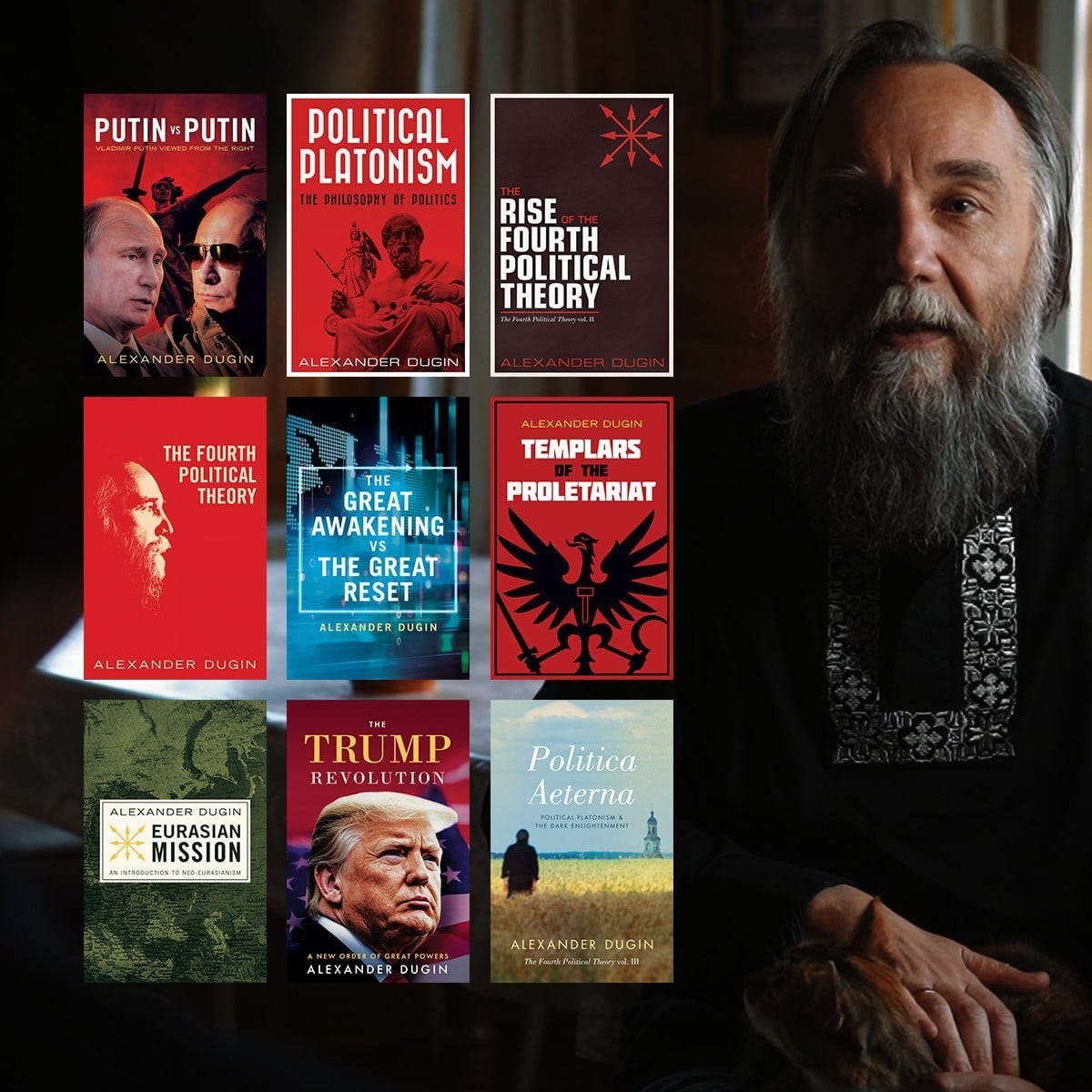
READ MORE by Prof. Alexander Dugin, brought to you in English by Arktos:
Thank you, Dr. Dugin for your excellent post. Happy New Year to you and for all the readers.
We should be reminded that 2026 marks the 250th birthday of the American Declaration of Independence, the document most hated by the globalists of the world; for 250 years those immortal words from America's founding fathers remain as strong as ever and all the more relevant; they formed the foundation for a new nation and a vision born from revolution and a desire for national sovereignty, not only for America but for the entire world; 250 years later that vision is far from being fully realized and is constantly threatened from forces from all sides; the signers of the Declaration knew how important their words would be for generations to come for they knew they were speaking on behalf of ALL of humanity; a single sentence undoubtedly qualifies for the greatest sentence ever written: "we hold these truths to be self-evident, that all men are created equal, that they are endowed by their Creator with certain unalienable rights, that among these are the right to life, liberty and the pursuit of happiness." Happy New Year, America, and thanks for keeping the dream alive in 2026!!!